
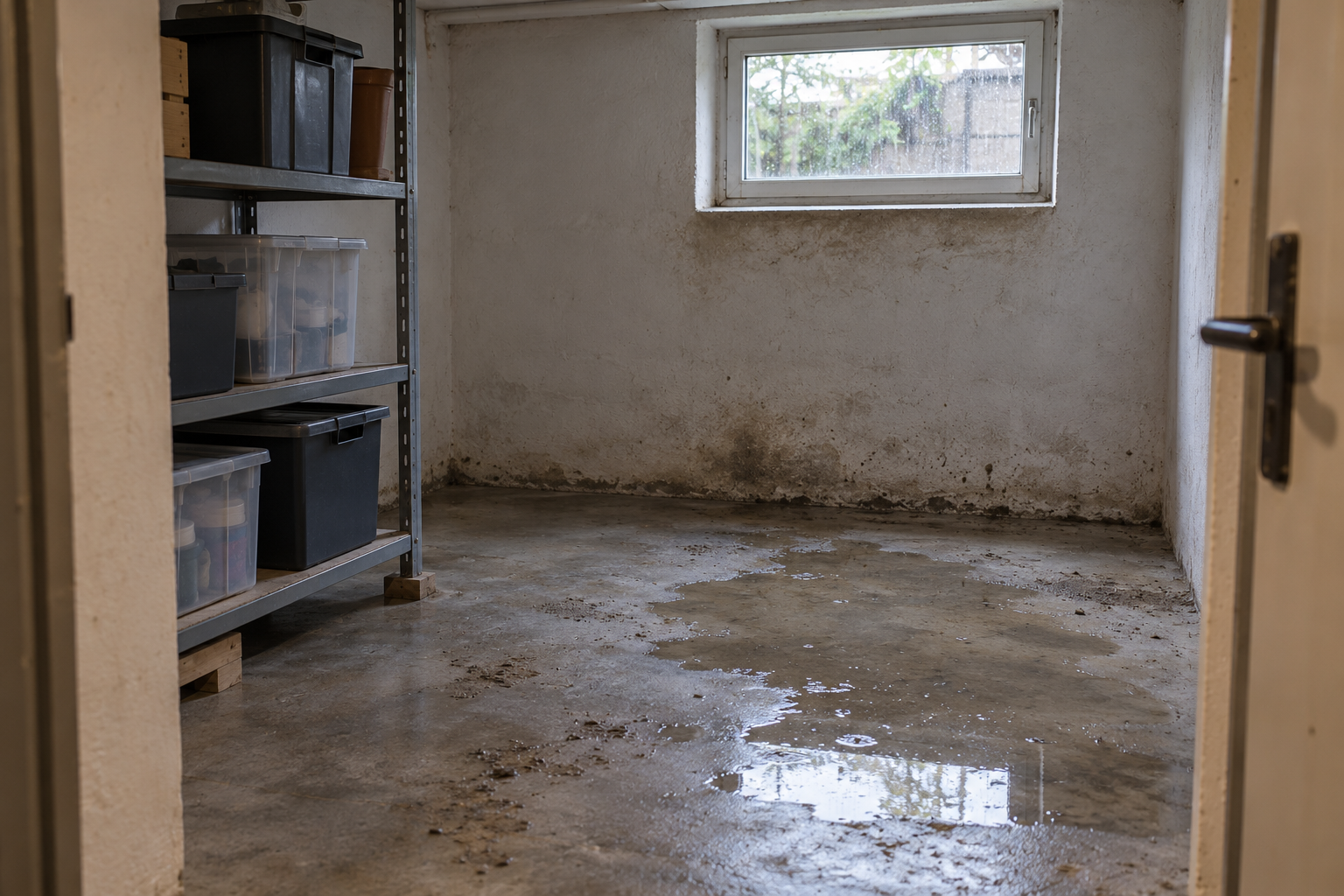
A dark patch on the wall, peeling paint or a musty basement can quickly raise questions about where the moisture is coming from. Does the basement need waterproofing, or is the problem related to indoor conditions? Before choosing a product, it is worth taking a closer look.
A damp basement wall can have several different causes. This guide helps you record your observations and prepare for the next steps. However, a single patch or photograph is not enough to establish a reliable diagnosis.
Moisture can enter from outside through building elements and leaks, result from damaged pipework or condense from the indoor air onto cool surfaces. Rising damp and construction materials that have not yet dried out are also possible causes. Several factors may contribute at the same time. The German Environment Agency describes different sources of moisture in its information on damp and mould.
When planning the next steps, it is therefore important to distinguish between an observation and a suspected cause. “The bottom of the wall is dark” describes what you can see. “It is rising damp” is already a diagnosis that this observation alone does not establish.
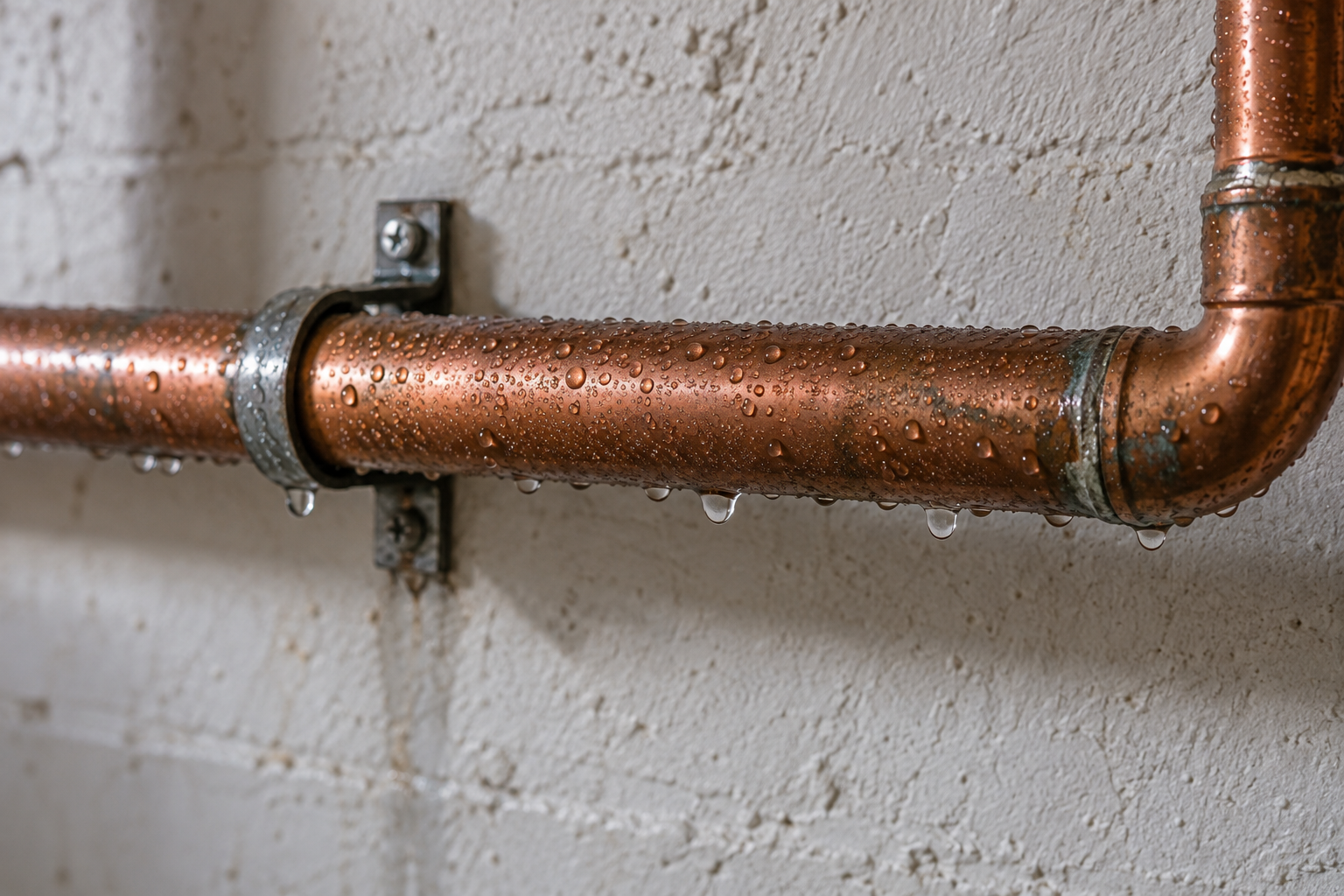
Condensation occurs when humid air cools against a sufficiently cold surface and water droplets form. In basements, this is particularly relevant during summer: warm outdoor air enters and comes into contact with cool basement walls. Under these conditions, leaving a window open for a long time can introduce additional moisture into the room.
A seasonal pattern or moisture on particularly cool surfaces may provide clues. However, these observations do not prove the cause. The German Environment Agency also explains this issue in its guidance on proper ventilation.
Temperature and humidity readings help document conditions, but they do not replace an investigation into the cause.
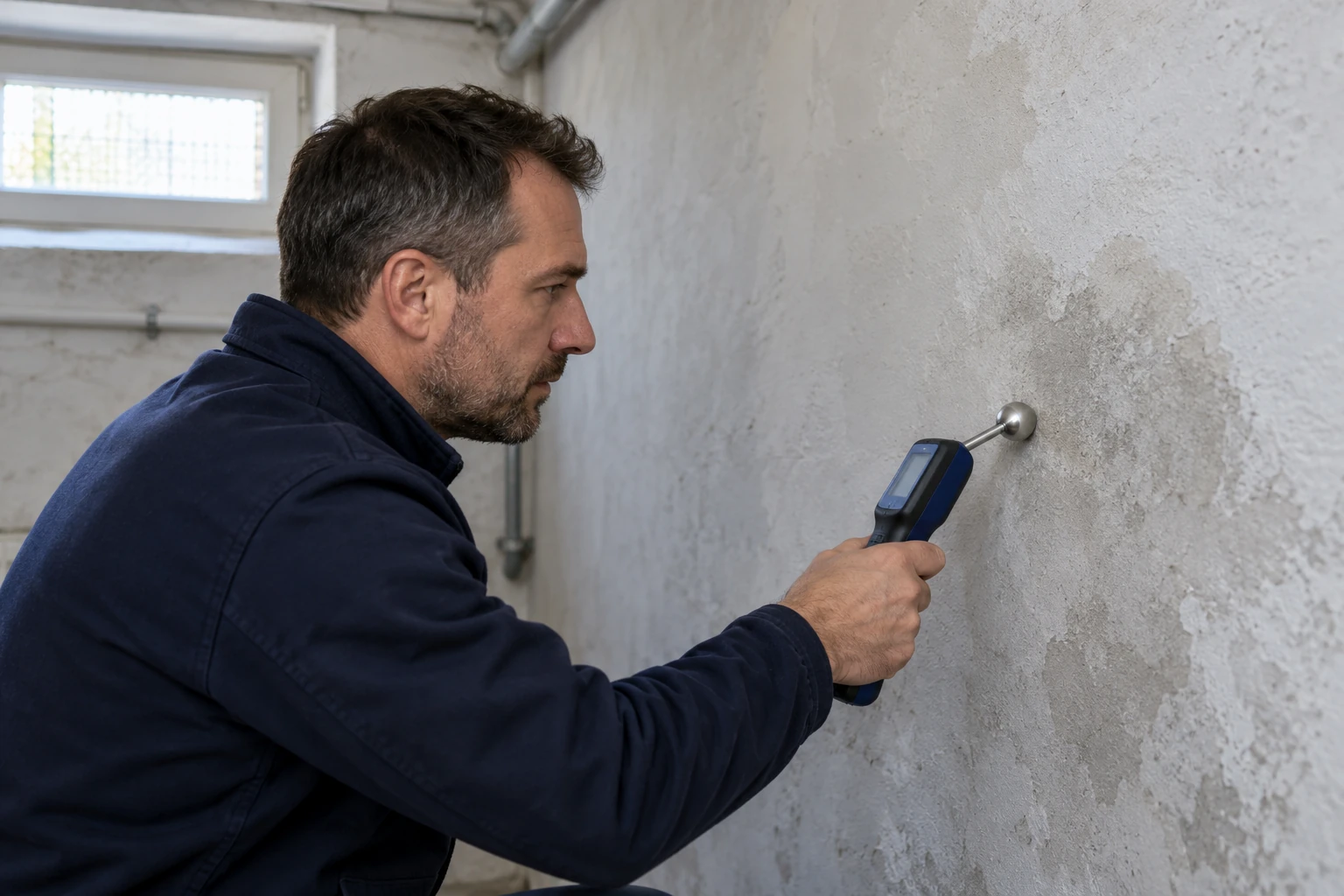
A thermo-hygrometer measures the temperature and relative humidity of the indoor air. Record the readings over several days and at different times. Note when the window was open and whether the weather outside was warm, cool or rainy. This creates a record that is more useful than a single reading.
The display does not tell you how much moisture is present in the masonry. High relative humidity alone does not prove that water is entering through the wall. Additional measurements and a professional inspection may be needed for a more accurate assessment.
Basement ventilation depends on conditions both indoors and outdoors. A rigid rule such as “always leave the window open in summer” is therefore unsuitable. If condensation keeps recurring, have the relationship between ventilation, room use and cold surfaces assessed.
If a patch becomes more noticeable after rain, or water can visibly be seen entering at a joint, this is important information for an investigation. Record where and when the change occurs. Also describe the affected wall’s location within the building and the adjoining building elements.
A damp patch close to floor level does not, by itself, prove a particular cause. Similarly, a surface that appears dry does not rule out moisture remaining within the building element. What matters is the overall picture: the construction, changes over time and appropriate professional checks.
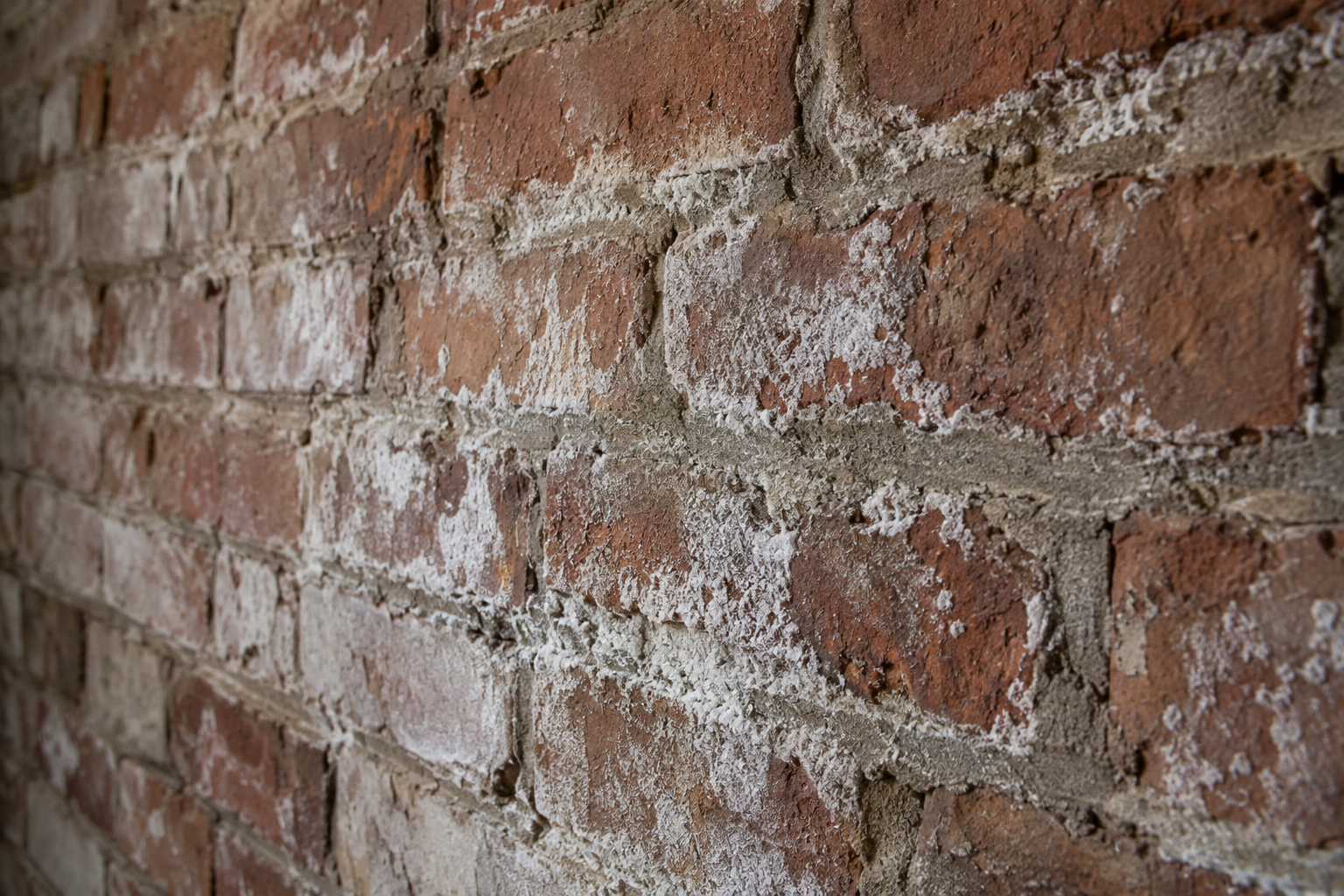
Discolouration, flaking plaster, white deposits and visible surface growth or coatings should be described separately wherever possible. Use descriptions such as “white, crumbly patches” or “a dark mark” instead of adopting an unconfirmed diagnosis. This makes follow-up questions easier and prevents the assessment from focusing too early on just one possible cause.
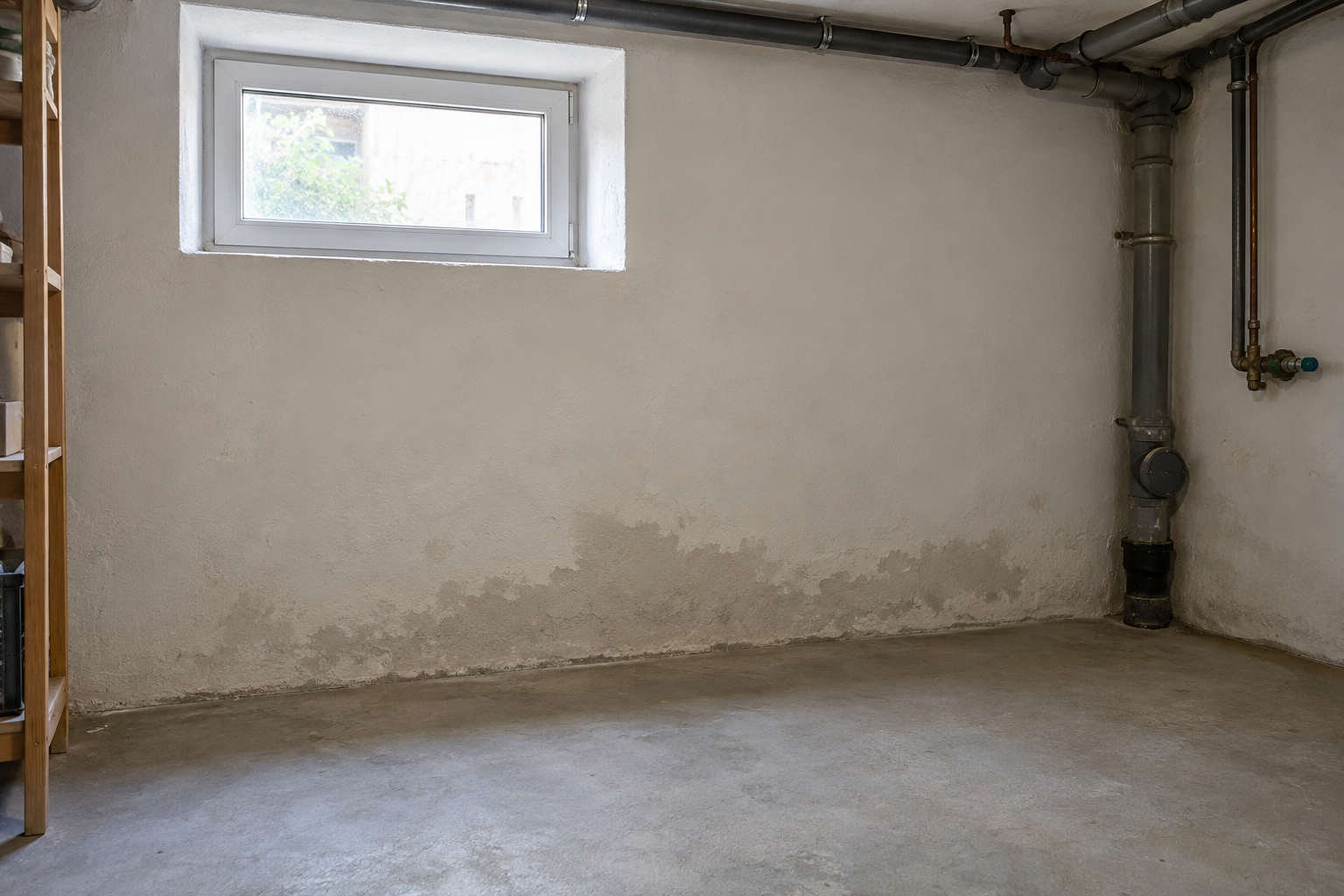
Overview and close-up photographs help document the condition of a damp basement wall clearly.
You do not need to determine the cause yourself. It is more helpful to document the situation clearly. For an initial enquiry, prepare the following information where possible:
Photograph the affected areas repeatedly from a similar position and record the date. Describe any changes in your own words. Do not rush to remove plaster or coatings simply to obtain what might appear to be a more revealing photograph.
If damp keeps returning or its cause is unclear, a professional inspection is advisable before major work begins. This is particularly important if water is visibly entering, damage is increasing or a pipe defect is suspected. In the event of active water ingress, contact a suitable specialist promptly.
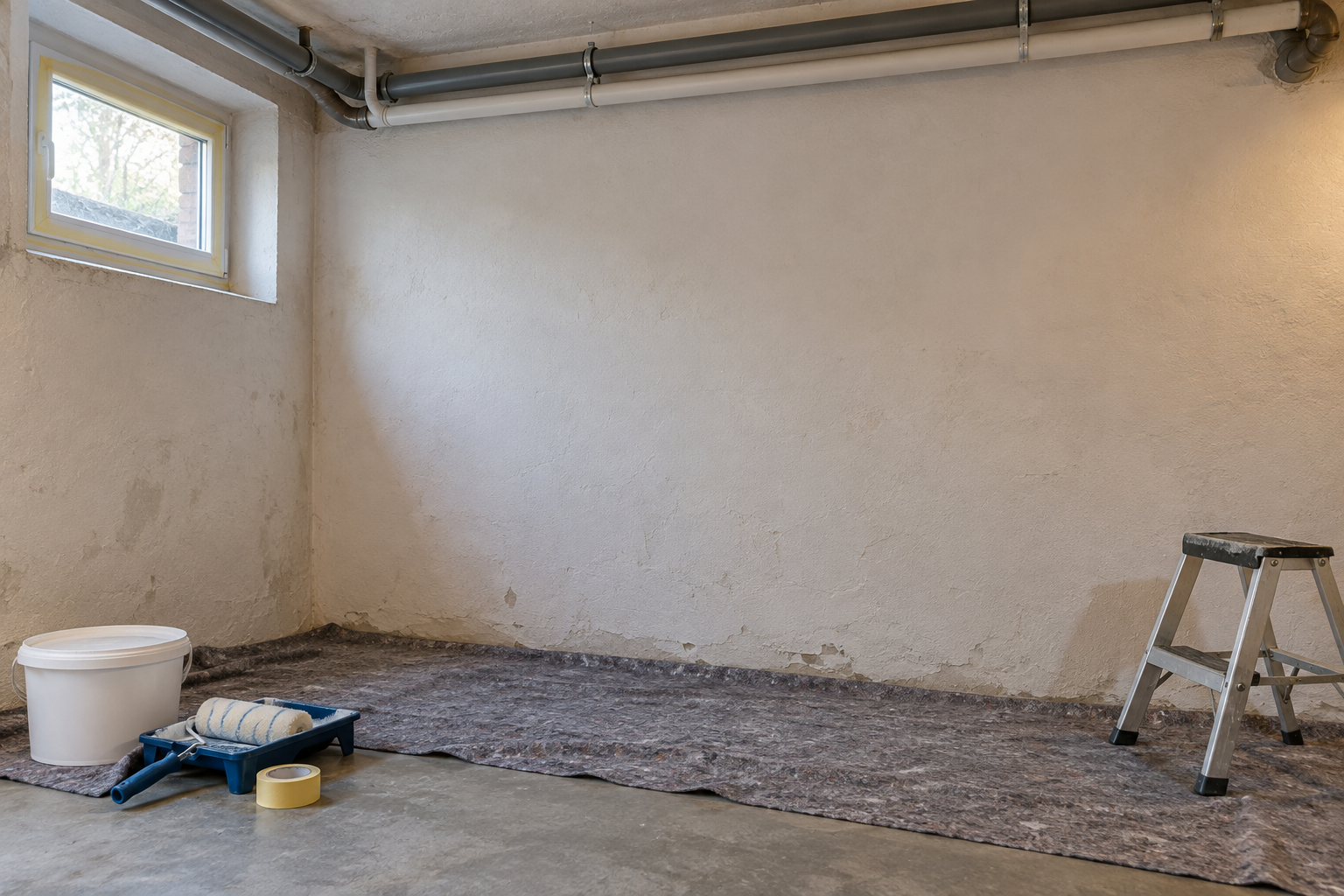
A musty smell or visible mould should also be investigated. Identifying the source of moisture is essential; a fresh coat of paint alone will not resolve it. The measures required depend on the actual findings.
Whether basement waterproofing is appropriate depends on the cause and the building’s construction. Water entering from outside requires a different approach from condensation caused by indoor air. Waterproofing therefore does not replace an assessment of indoor conditions, nor does it automatically repair damaged pipework.
Before applying a product, discuss the substrate, existing coatings and the intended use of the space. Blanket statements such as “a damp wall needs waterproofing” are too simplistic. Choosing an appropriate solution starts with identifying where the moisture is actually coming from.
Would you like to find out whether Thor Protect is suitable for your situation? Prepare your observations and photographs and contact Thor Protect for advice. Include any unanswered questions and details of work already carried out.
For suitable applications, Thor Protect offers a test kit for 1 m². This allows the application to be tried on a small area before larger-scale work is planned. Follow the current product and application instructions, particularly those covering preparation, application and assessment of the results.
A small-area test does not replace an investigation into the cause of damp. The result should also be considered alongside the conditions on site before assuming it will apply to other wall areas. This provides a basis for discussing whether a larger application using a complete kit would be appropriate.
Visible changes on a basement wall can have several different causes.
Yes. In addition to water ingress, condensation on cold surfaces is one possible cause. The source of moisture should therefore be established before deciding on a treatment.
Photographs help describe the location and appearance of the affected areas. However, they are not sufficient on their own for a reliable diagnosis. Depending on the situation, follow-up questions, measurements or an on-site inspection may be required.
First establish where the moisture is coming from and whether the product is suitable for your substrate and intended application. An unsuitable treatment may fail to address the actual cause.
PayPal uses Google reCAPTCHA to help secure the payment process. (More Information)
You are currently viewing a placeholder content from Vimeo. To access the actual content, click the button below. Please note that doing so will share data with third-party providers.
More InformationYou are currently viewing a placeholder content from YouTube. To access the actual content, click the button below. Please note that doing so will share data with third-party providers.
More InformationYou need to load content from reCAPTCHA to submit the form. Please note that doing so will share data with third-party providers.
More Information