
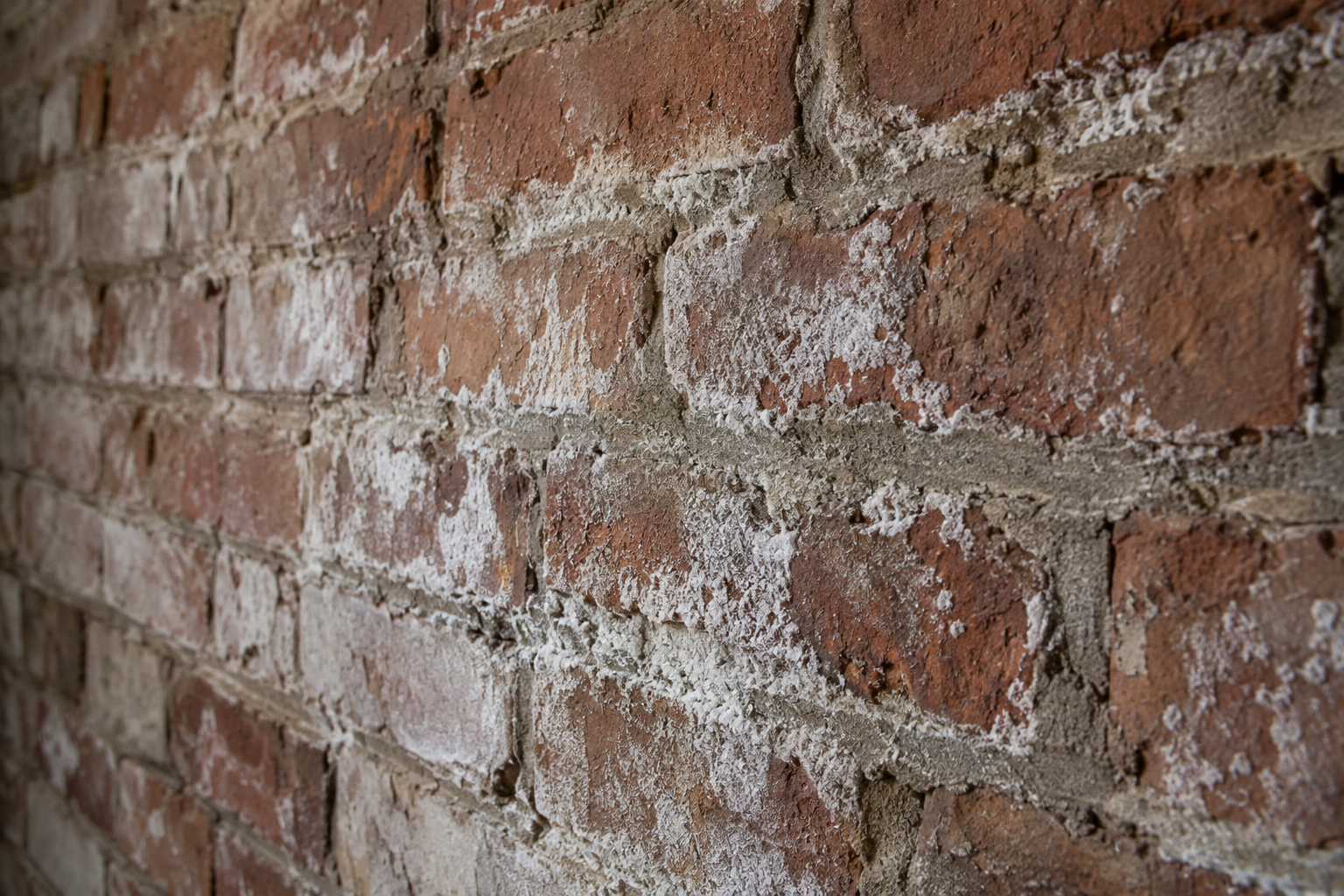
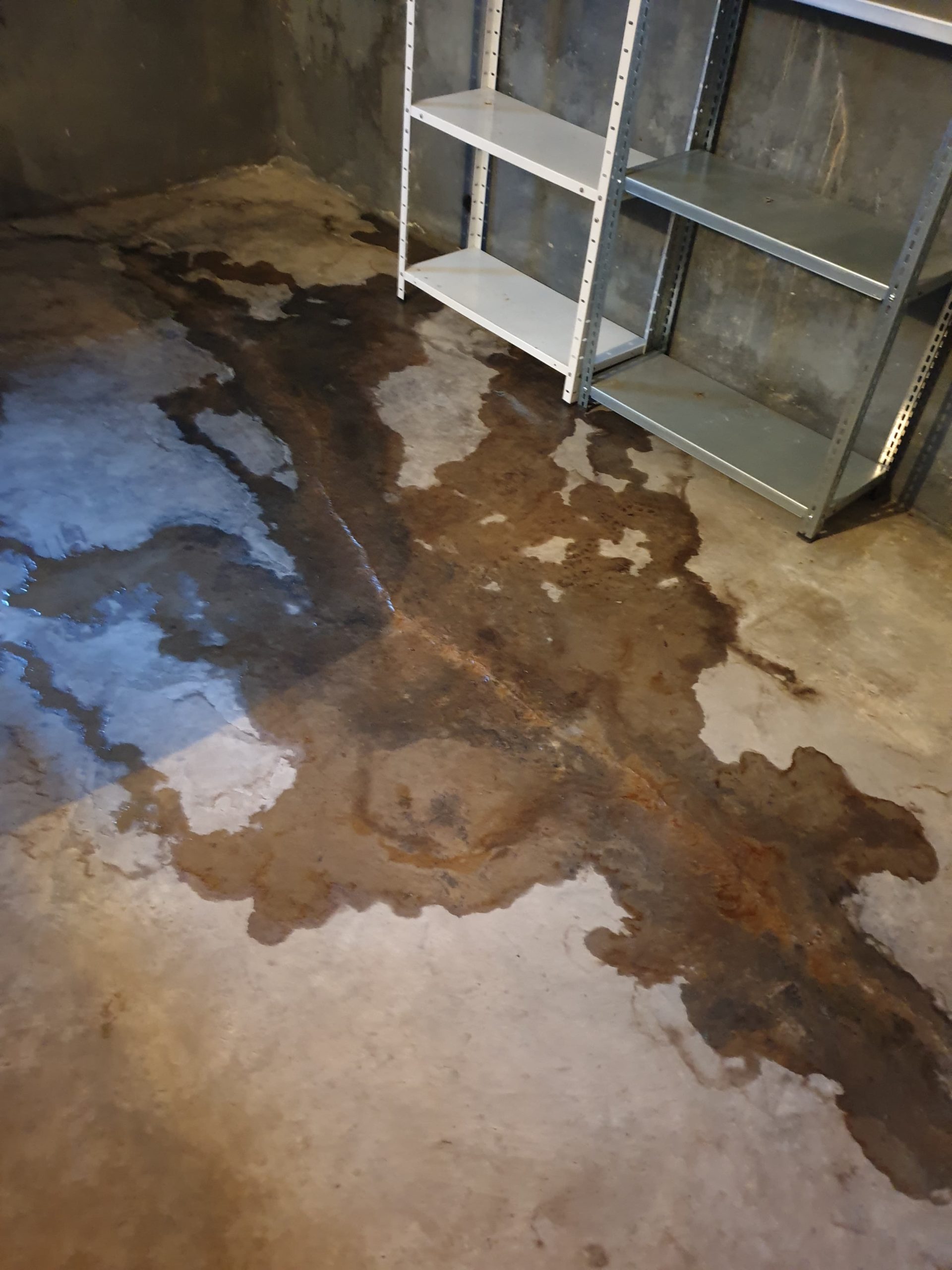
Basement efflorescence often becomes noticeable during a clear-out: pale marks appear behind a shelf, a whitish coating covers the plaster, or small crusts form between bricks. It is tempting to assume that a quick clean will solve the problem.
Before treating the affected area, take a closer look. A change on the surface does not tell the whole story of the wall.
Water can carry dissolved salts through masonry. As it evaporates at the surface, deposits remain. These may become visible as whitish efflorescence. Remmers explains the connection between moisture and salt deposits.
No. Colour alone is not enough to identify a deposit reliably. Some forms of mould can look similar to salt deposits to an untrained observer. A photograph alone therefore cannot provide a reliable assessment. Remmers also highlights this difficulty.
When making an enquiry, start by describing what you can see: for example, “white deposits along the mortar joints” rather than assuming a diagnosis.
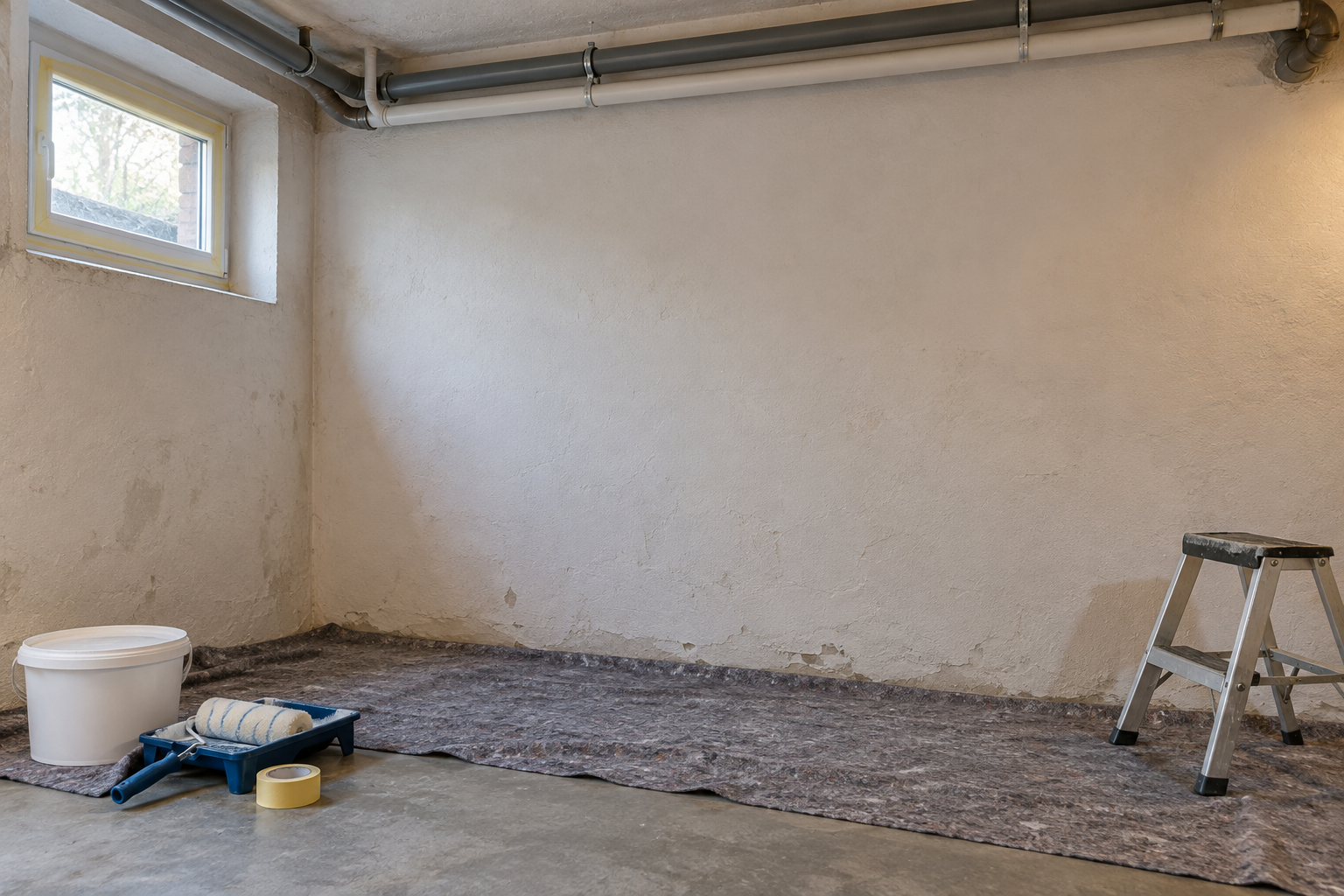
Salts and moisture can damage plaster and masonry. A fresh coat of paint alone does not address this underlying interaction. Any repair needs to take the existing surface and its condition into account. SAKRET explains the requirements for treating damp, salt-contaminated masonry.
Before arranging extensive work, establish which treatment is suitable for the wall.
The following details can help prepare for an initial consultation:
Take photographs of the whole wall as well as close-ups. Add the date and record any previous work you know about.
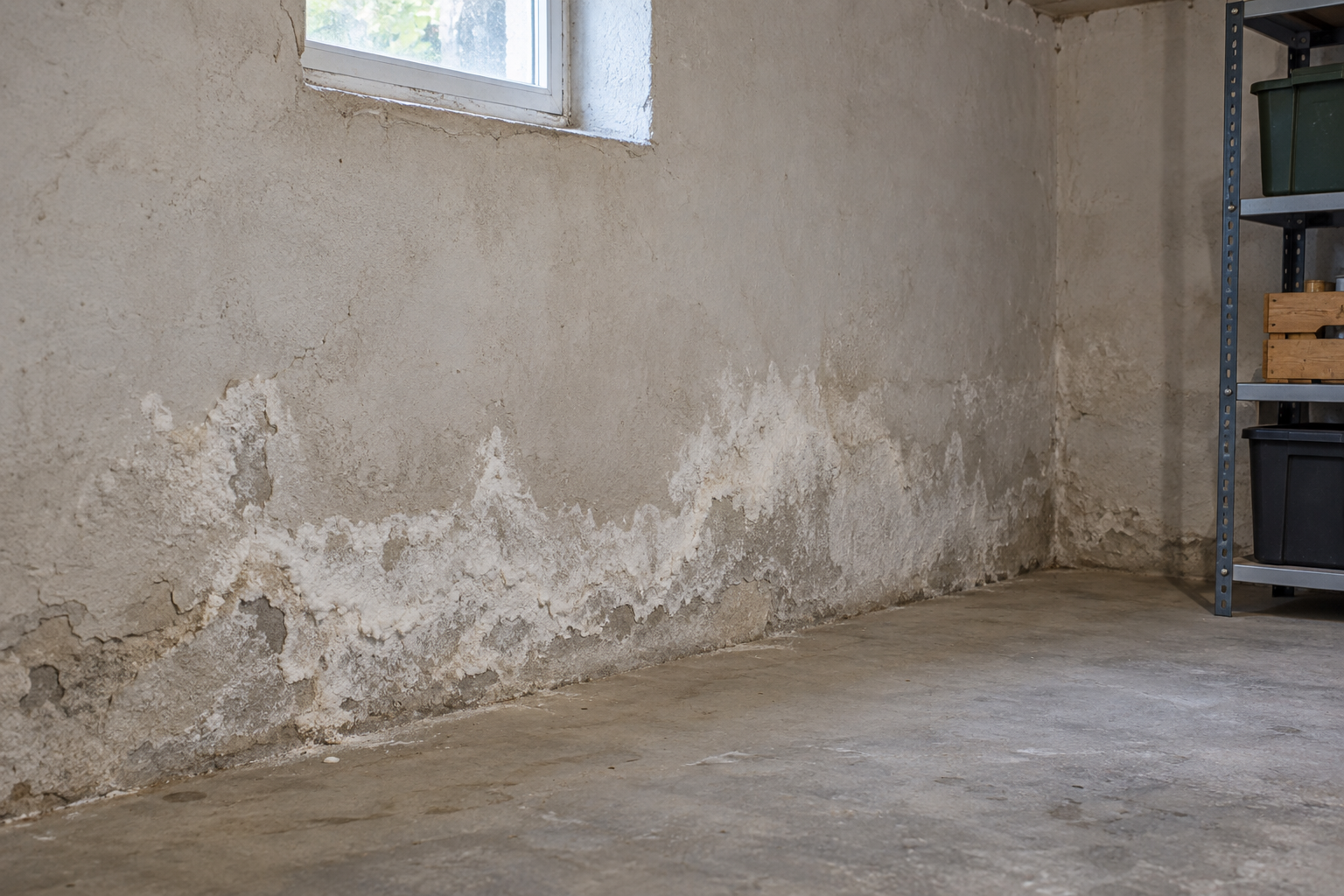
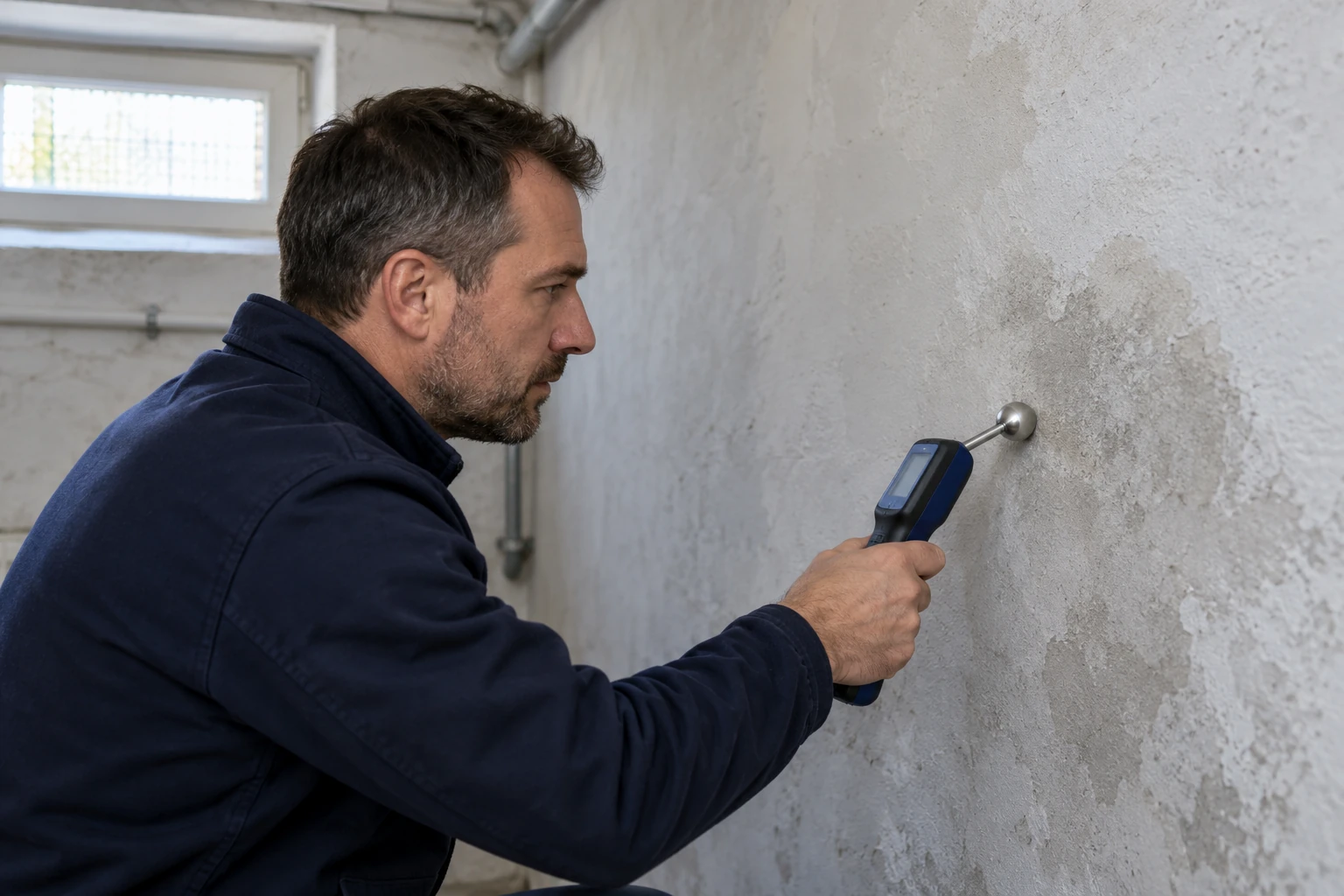
Recurring deposits or increasing plaster damage warrant a professional assessment. This may include examining moisture distribution and salt contamination. The findings can then inform the next steps. Read more about building condition analysis from Remmers.
Would you like to know whether Thor Protect could be suitable for your basement? Describe the affected areas and any previous treatments. Photographs can help prepare for the discussion.
The suitability of an application should be assessed against the specific conditions on site.
Contact Thor Protect to discuss your basement.
PayPal uses Google reCAPTCHA to help secure the payment process. (More Information)
You are currently viewing a placeholder content from Vimeo. To access the actual content, click the button below. Please note that doing so will share data with third-party providers.
More InformationYou are currently viewing a placeholder content from YouTube. To access the actual content, click the button below. Please note that doing so will share data with third-party providers.
More InformationYou need to load content from reCAPTCHA to submit the form. Please note that doing so will share data with third-party providers.
More Information