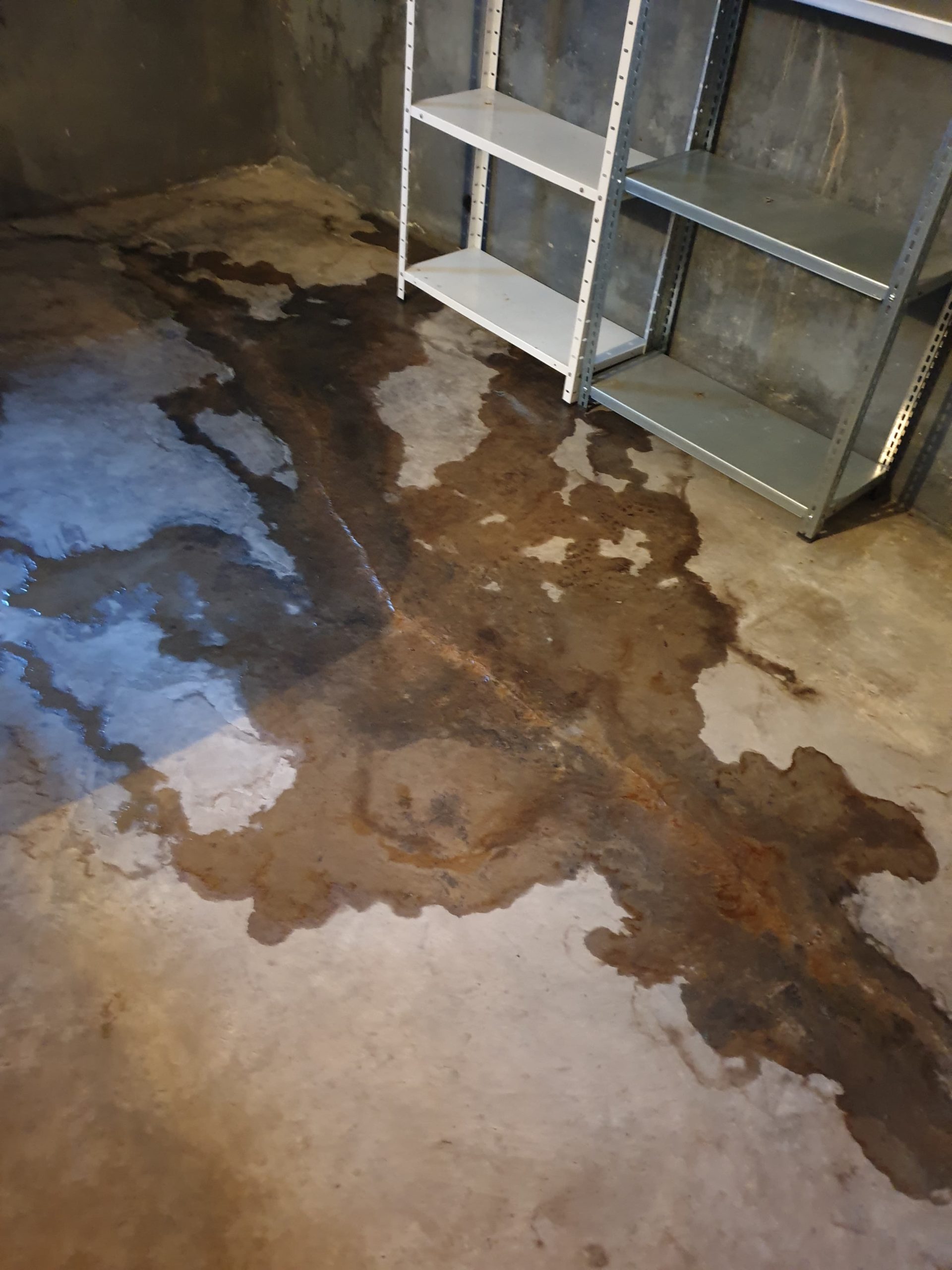

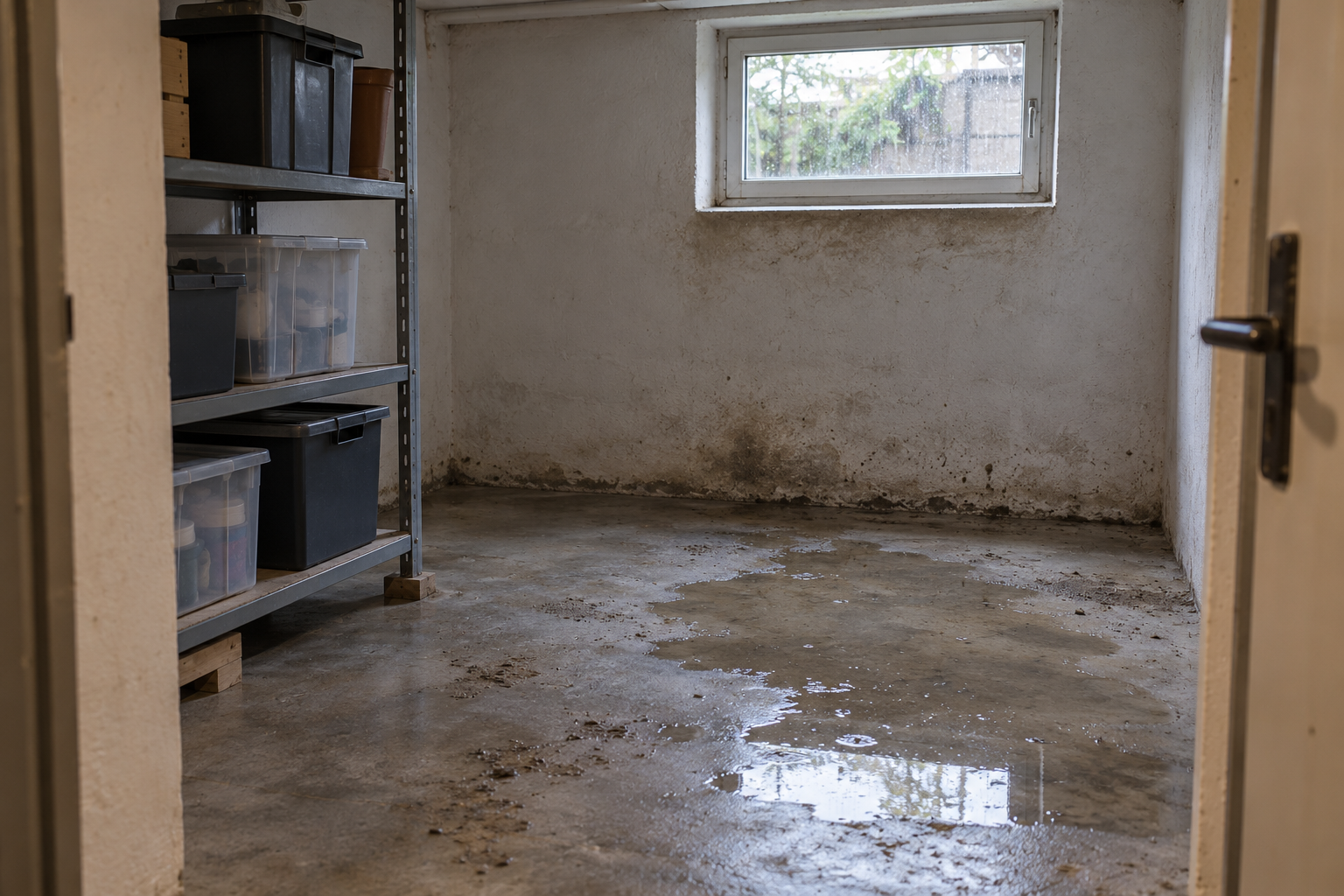
Checking your basement after heavy rain may reveal water on the floor, muddy traces beneath a window or a new damp patch on the wall. It is understandable to want to clear everything up immediately. However, the order matters: establish that access is safe, record the damage and then investigate the cause.
A clear plan helps you explain what happened to contractors and organise the work that follows. It also reduces the risk of starting cosmetic repairs before the underlying problem has been assessed.
These five steps offer a starting point. During an active flood, follow the instructions of the emergency services.
Do not enter a flooded basement or go inside to reach electrical switches or appliances. Floodwater can create electrical hazards and trap people as levels rise. Call 999 if someone is in immediate danger.
Before returning to a flood-affected property, establish that it is safe. Have affected utilities assessed by the relevant supplier or a qualified professional before switching them back on. GOV.UK explains what to do after a flood, with links to guidance for Scotland, Wales and Northern Ireland.
Do not assume that a falling water level makes the room safe to enter. Arrange any necessary checks before beginning an inspection or moving belongings.
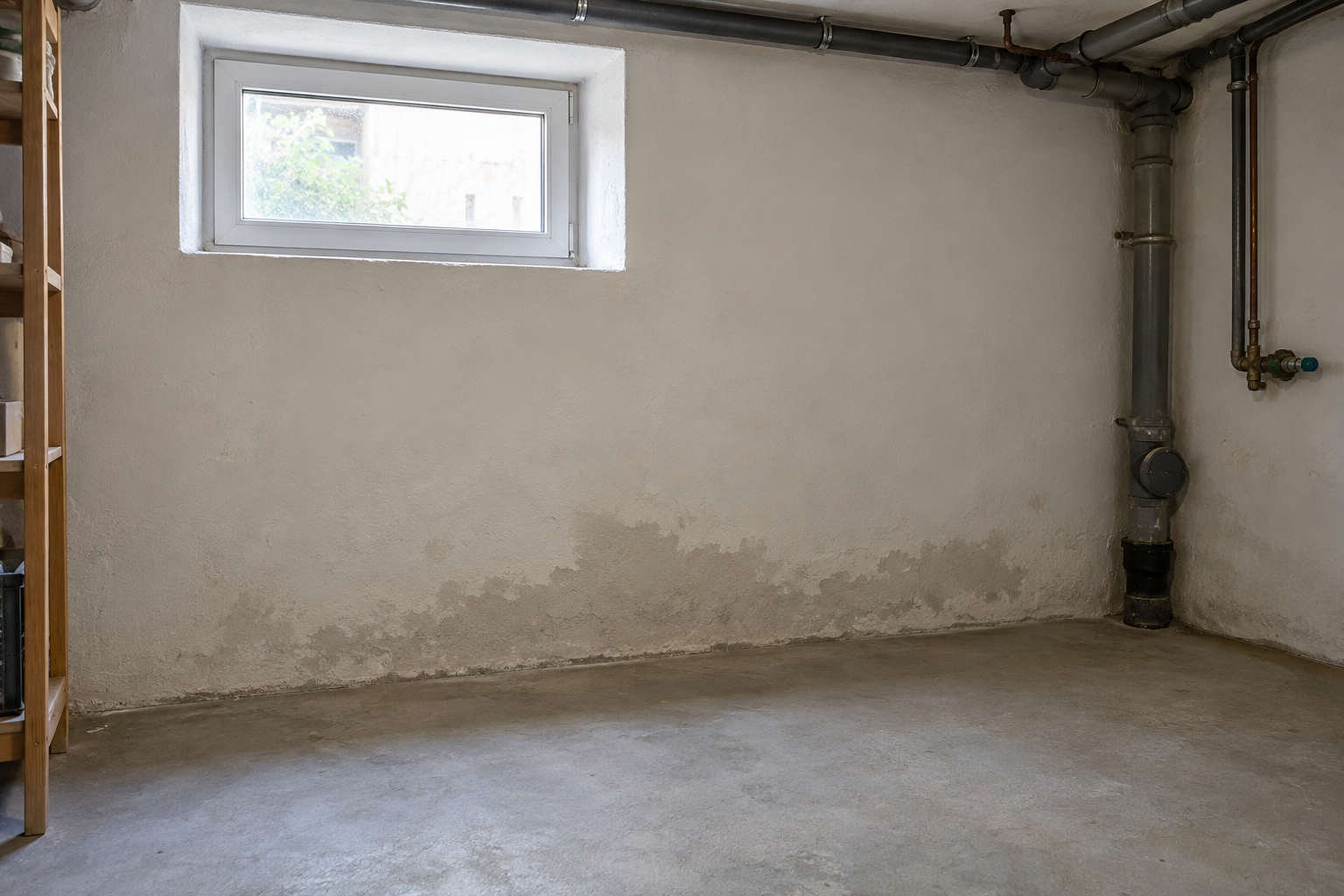
Once access is safe, photograph affected rooms, water marks and damaged belongings. Record the date, approximate time and what you observed. Contact your insurer and ask what evidence they need before moving or disposing of damaged items. GOV.UK provides advice on documenting damage and contacting your insurance company.
Keep a simple record containing:
Use clear descriptions rather than assumptions. “Water beneath the window after the storm” is more useful than recording an unconfirmed diagnosis.
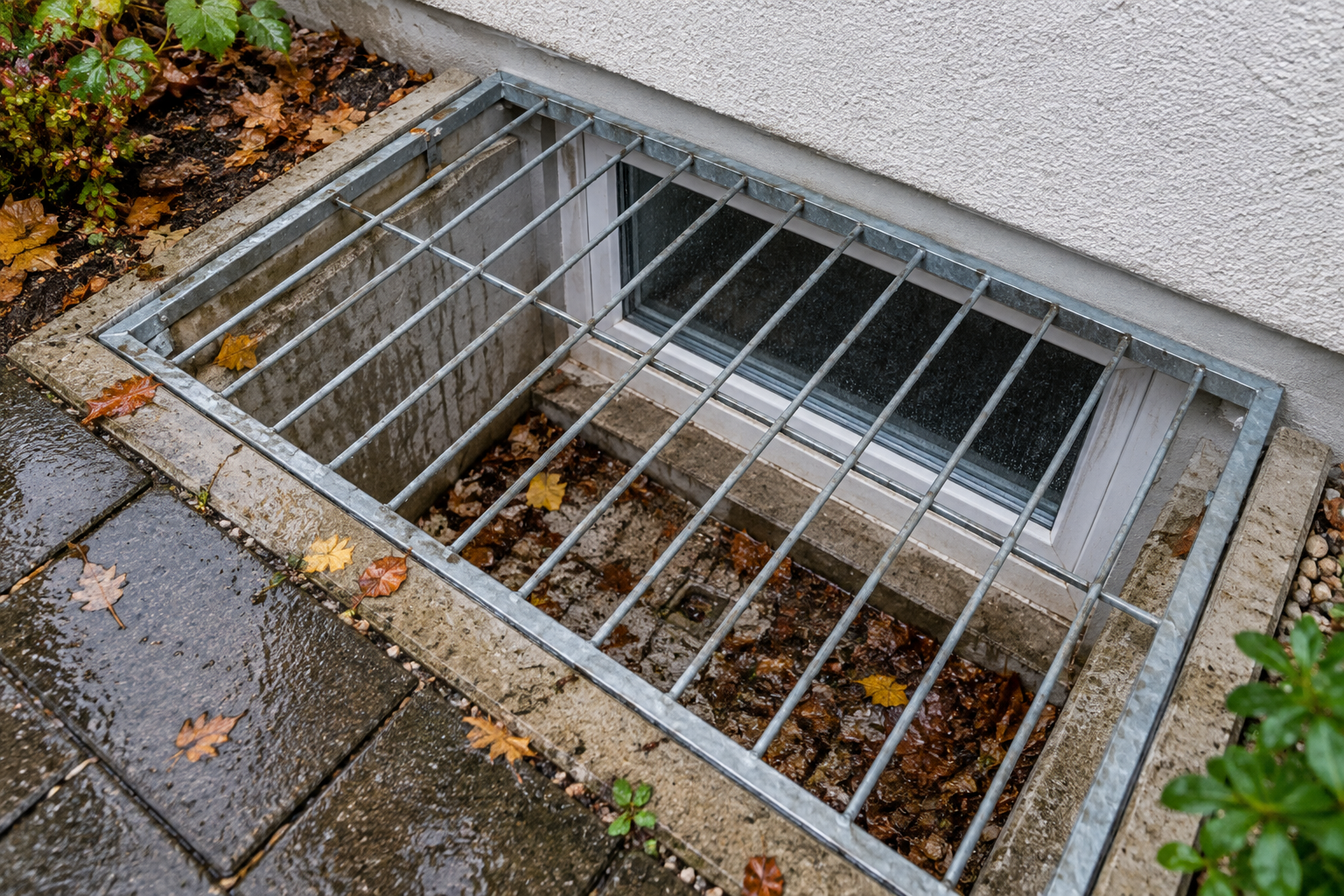
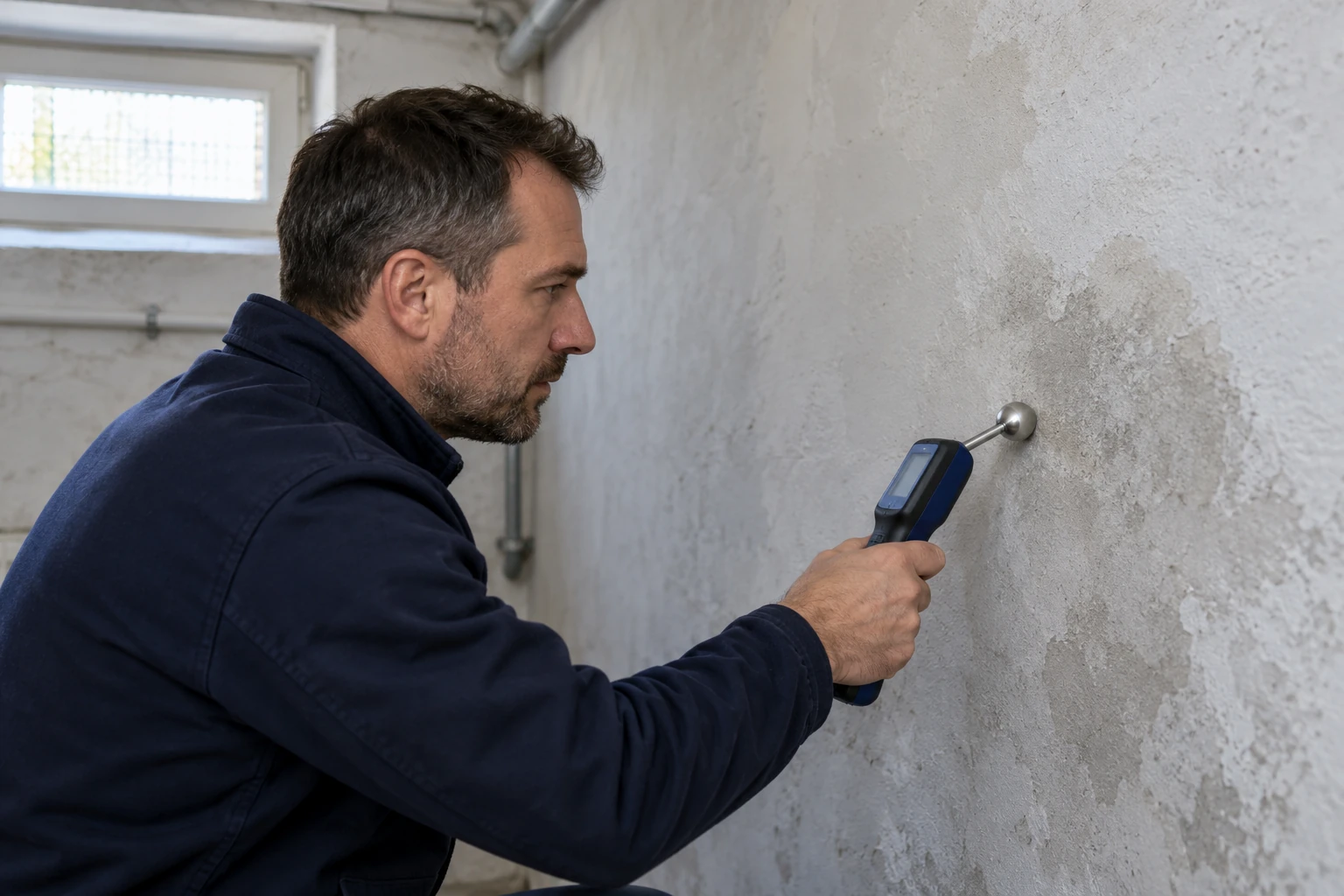
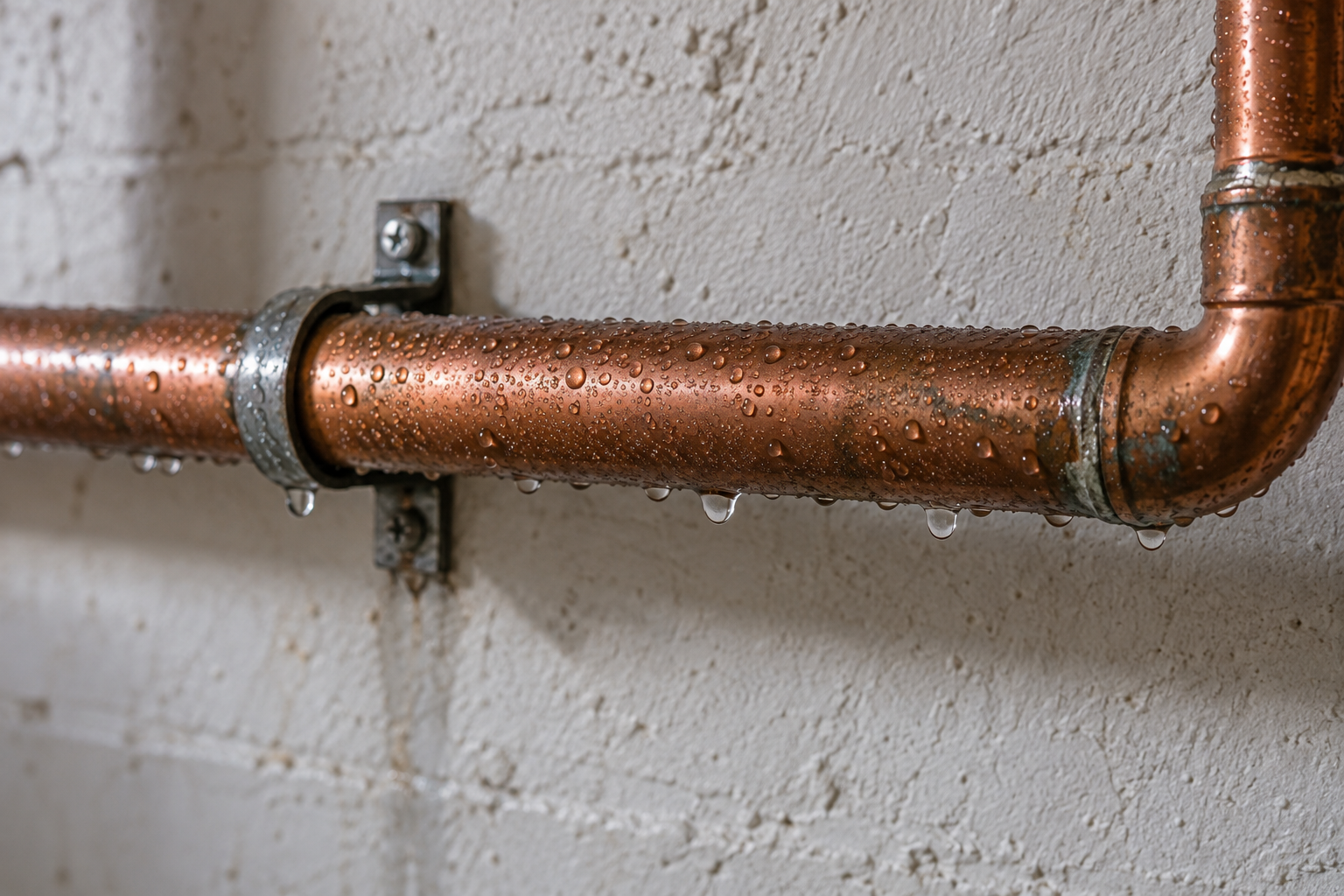
A wet basement after heavy rain does not automatically prove that the wall waterproofing has failed. Ask a specialist to assess possible entry routes, including windows, drains, pipe penetrations and the wall-to-floor junction.
Describe whether the problem appeared suddenly or developed over several hours. Mention previous incidents, recent building work and any changes to the surrounding ground or drainage.
Keep observations separate from conclusions. Water visible at one point may not reveal its complete route through the building. The investigation should establish which defects or conditions need attention before a repair method is selected.
Ask for the findings in writing, including any remaining uncertainties and recommended further checks.
Do not rush into pumping out a flooded basement. Water levels around the building affect whether pumping is appropriate. Environment Agency guidance explains why external water levels and structural conditions matter.
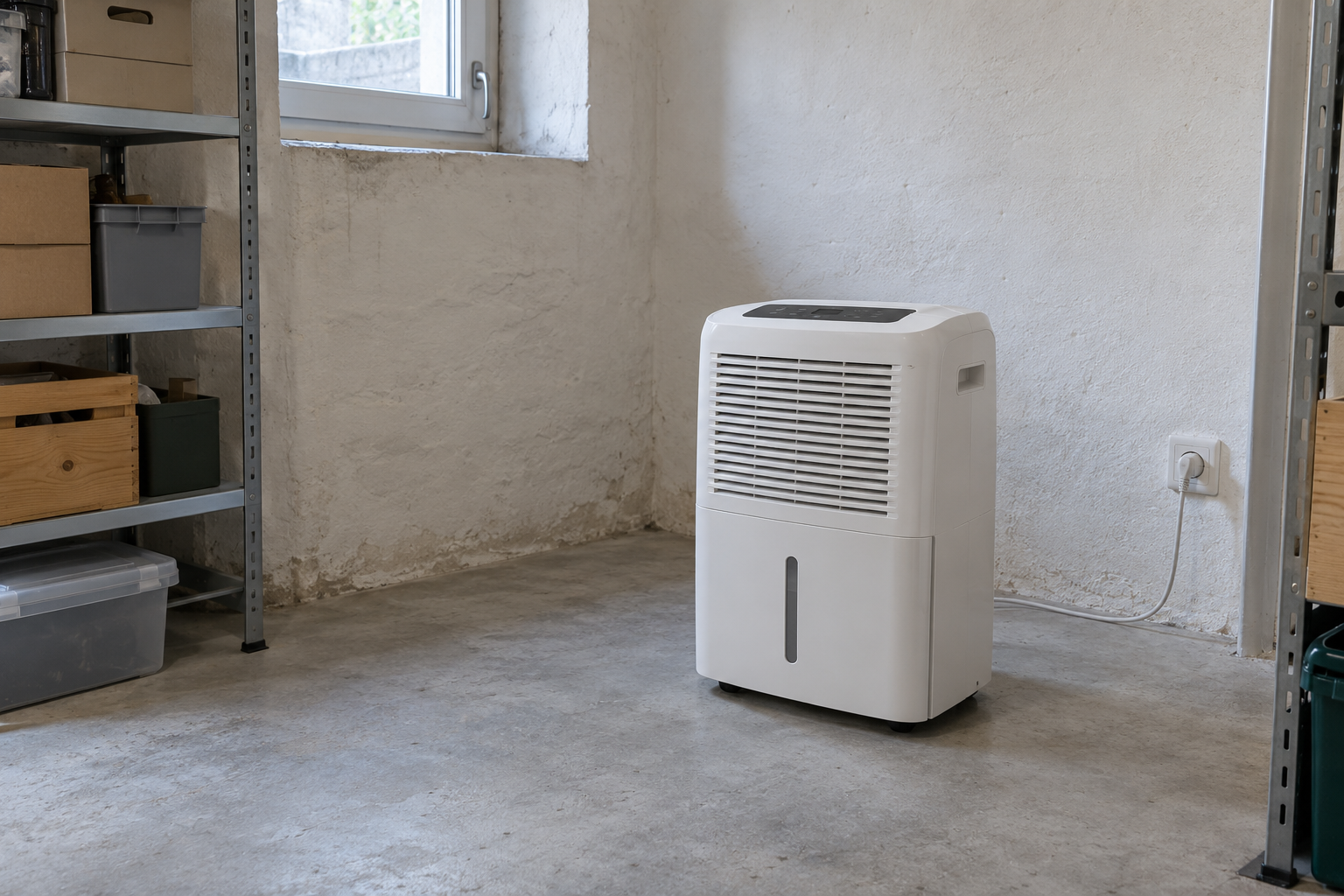
Have the timing and method assessed before starting. Cleaning and drying should also match the nature and extent of the damage.
Discuss the proposed work with your contractor. Which materials can remain? Which may need removing? How will moisture levels be assessed, and who will confirm that the affected surfaces are ready for the next stage?
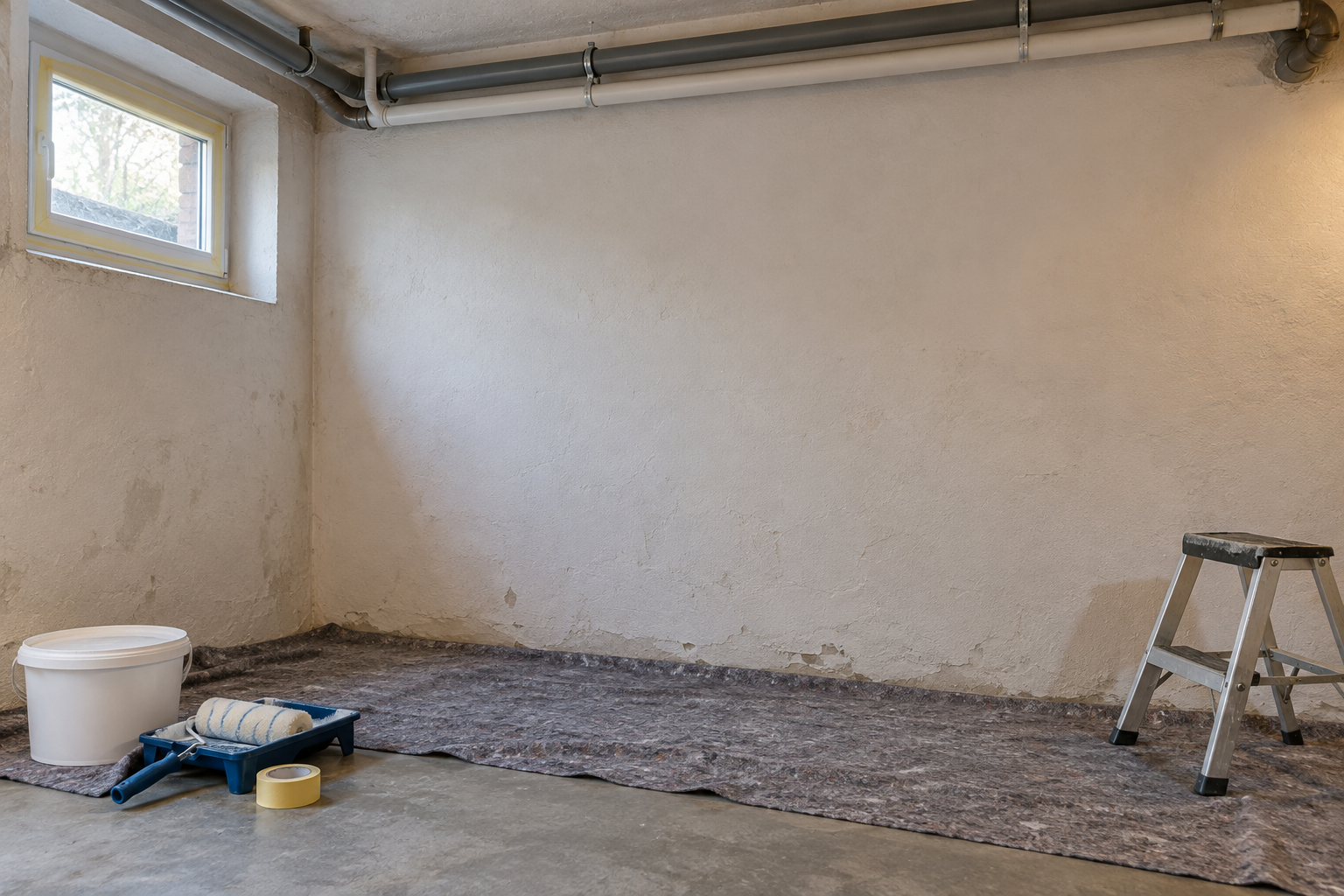
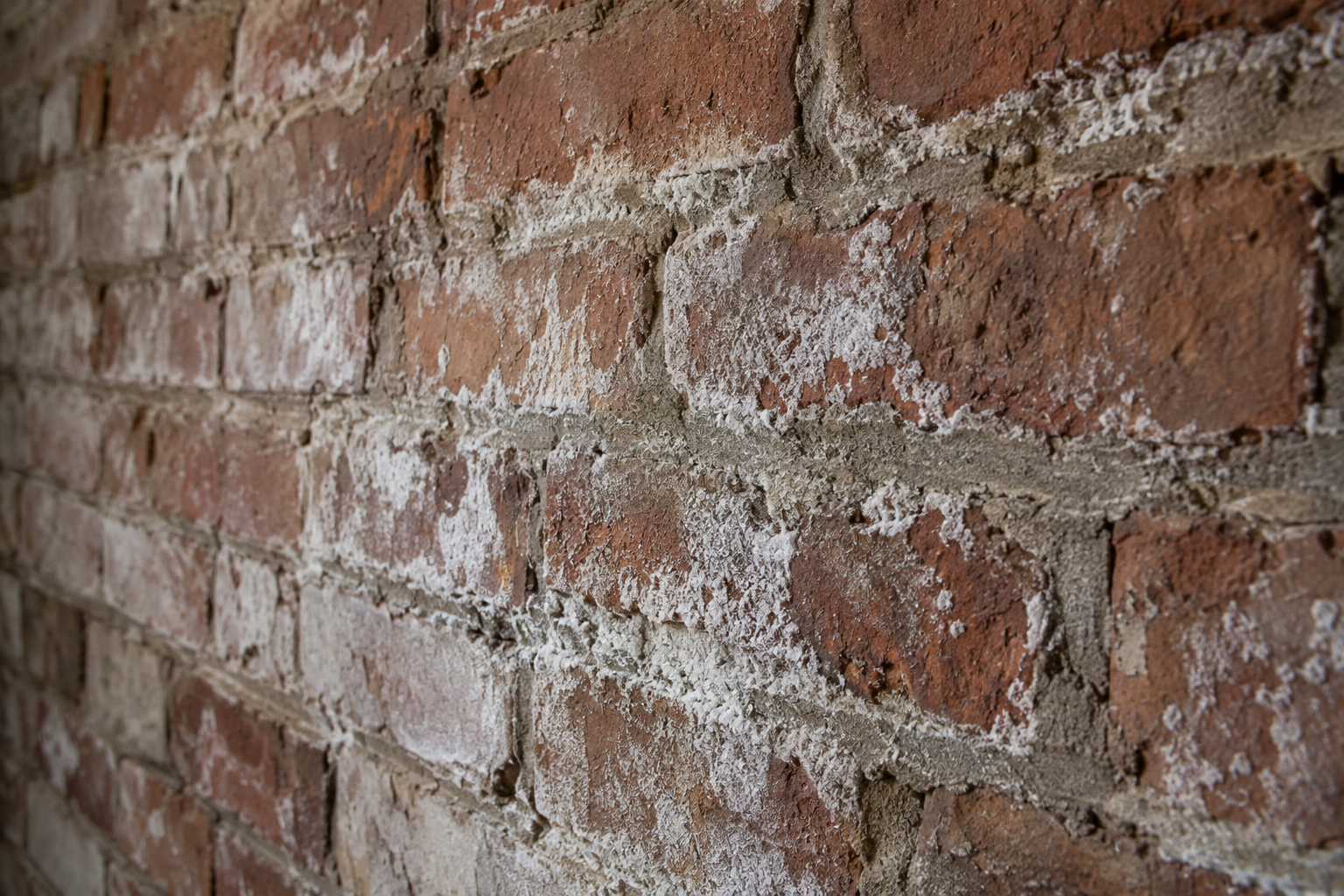
Agree these checks before redecorating. A wall that looks dry on the surface does not necessarily demonstrate that the underlying construction is ready for new finishes. Ask the contractor to explain the criteria for applying paint, plaster or flooring, and retain any relevant inspection or drying records.
After the investigation, ask specific questions: what needs repairing? Should windows, drainage or backflow protection be addressed? Who will check the completed work?
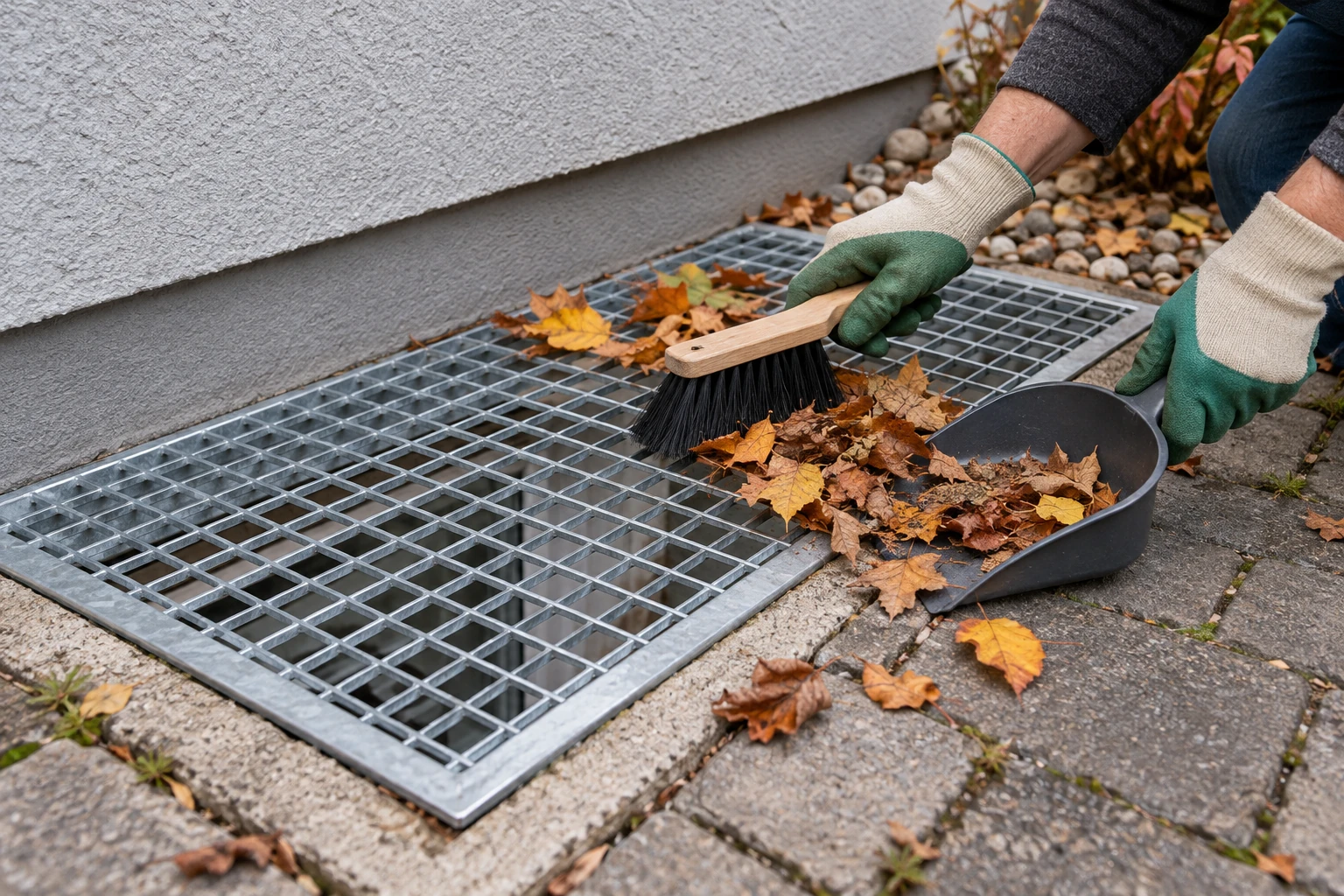
Flood prevention may involve several building features. GOV.UK outlines options for protecting a property, including measures relating to drains and vulnerable openings.
Separate urgent repairs from improvements that can be planned later. If several contractors are involved, clarify who coordinates the work and whether one task must be completed before another begins.
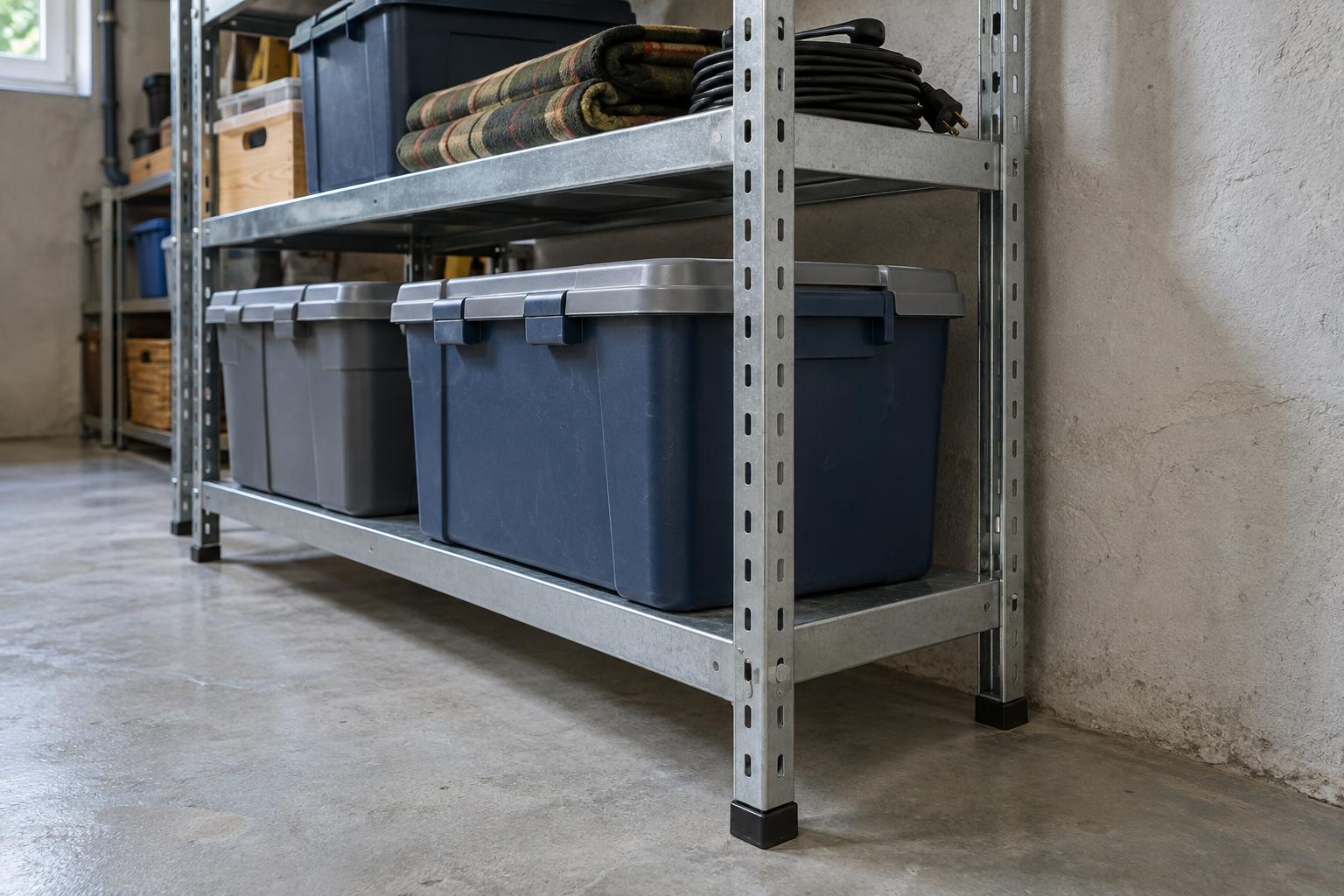
To better protect your basement after heavy rain, base the plan on the identified entry routes. Keep inspection findings, photographs, agreed actions and maintenance instructions together. This makes future checks easier and provides a useful record if the problem returns.
If an investigation identifies moisture entering through suitable wall surfaces, the potential use of Thor Protect can be discussed. A wall treatment does not replace repairs to windows, drains or plumbing.
Before choosing a product, review our information about Thor Protect and how the waterproofing system works. The application needs to suit the substrate, the diagnosed problem and the conditions on site.
Prepare photographs and any inspection findings before making an enquiry. Include details of previous treatments and repairs so that the discussion considers the wall’s existing condition.
Speak to Thor Protect about whether an application is suitable for your situation.
PayPal uses Google reCAPTCHA to help secure the payment process. (More Information)
You are currently viewing a placeholder content from Vimeo. To access the actual content, click the button below. Please note that doing so will share data with third-party providers.
More InformationYou are currently viewing a placeholder content from YouTube. To access the actual content, click the button below. Please note that doing so will share data with third-party providers.
More InformationYou need to load content from reCAPTCHA to submit the form. Please note that doing so will share data with third-party providers.
More Information