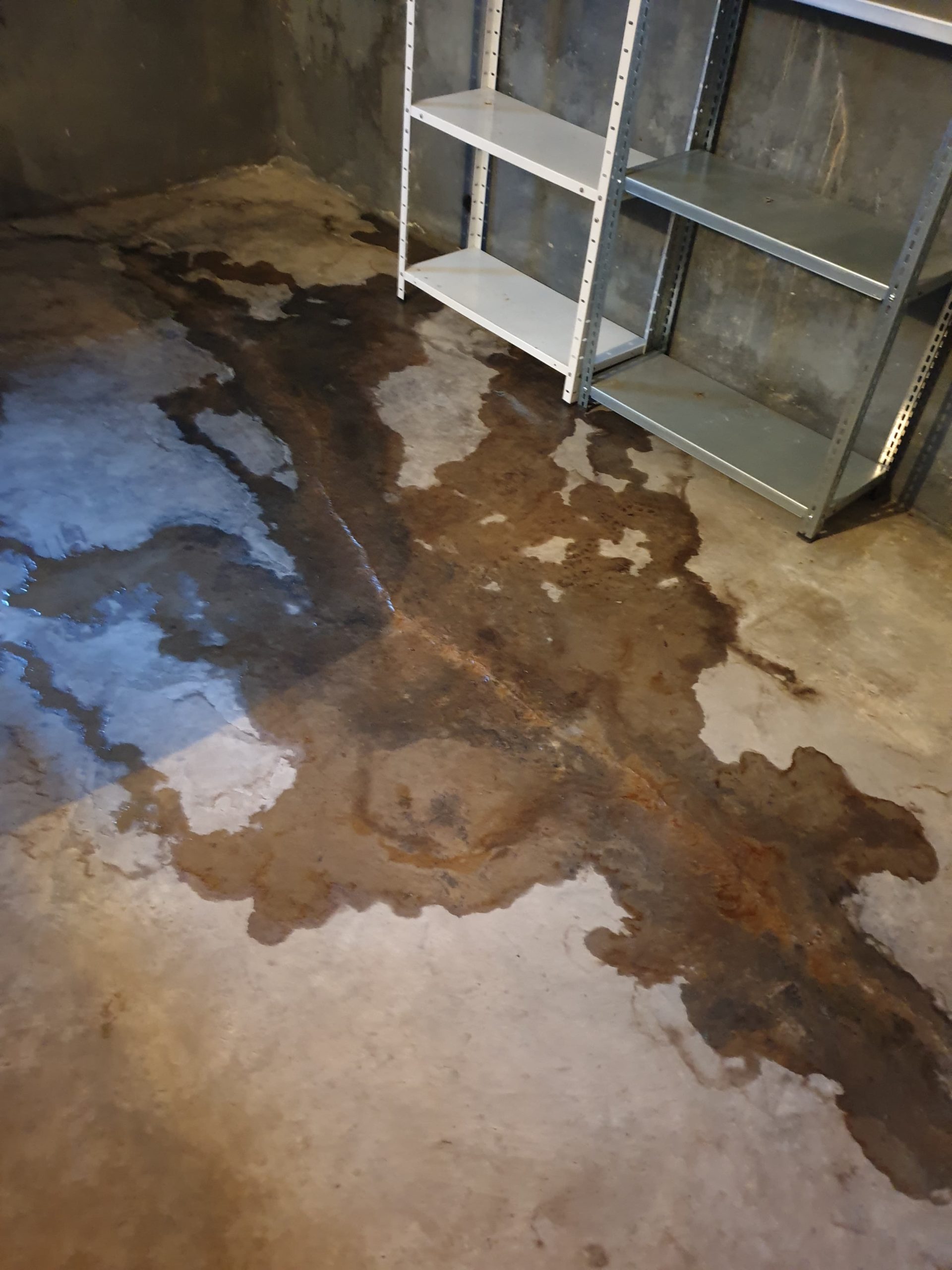

Basement storage often starts with shelves, boxes and the promise of extra space. But a good layout should do more than accommodate as many belongings as possible: items need to remain accessible, walls should be easy to inspect and storage conditions must suit what you keep there.
These five tips will help you organise your basement and make it easier to use over time.
Before buying shelves, make an inventory. What do you want to store, how often do you need it and what conditions does it require?
A damp basement is unsuitable for documents and photographs. The German consumer advice organisation Verbraucherzentrale recommends a dry, clean and preferably dark storage location for these items. Guidance on storing documents.
Check the relevant storage instructions for other belongings. Then divide everything into three groups: regularly used, seasonal and long-term storage. This makes it easier to decide what needs to be within easy reach and what can go further back.
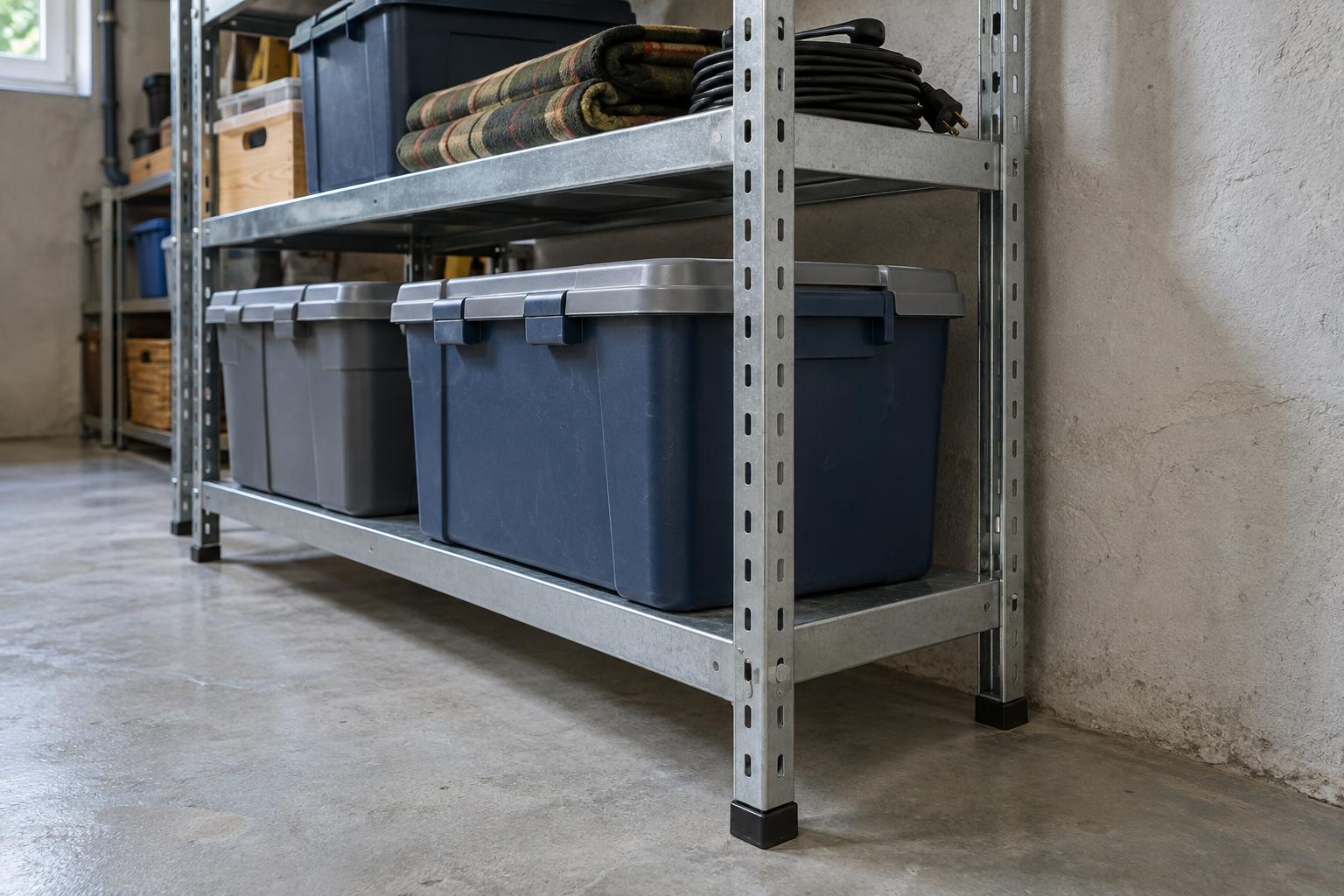
Avoid filling every available corner. Verbraucherzentrale recommends keeping stored items away from external walls and the basement floor to allow air to circulate. Recommendations for basement storage.
Open shelving can make it easier to see what you have. Arrange it so that you can also inspect the areas behind and beneath your belongings. Leaving a gap does not, on its own, make a damp room suitable for storage.
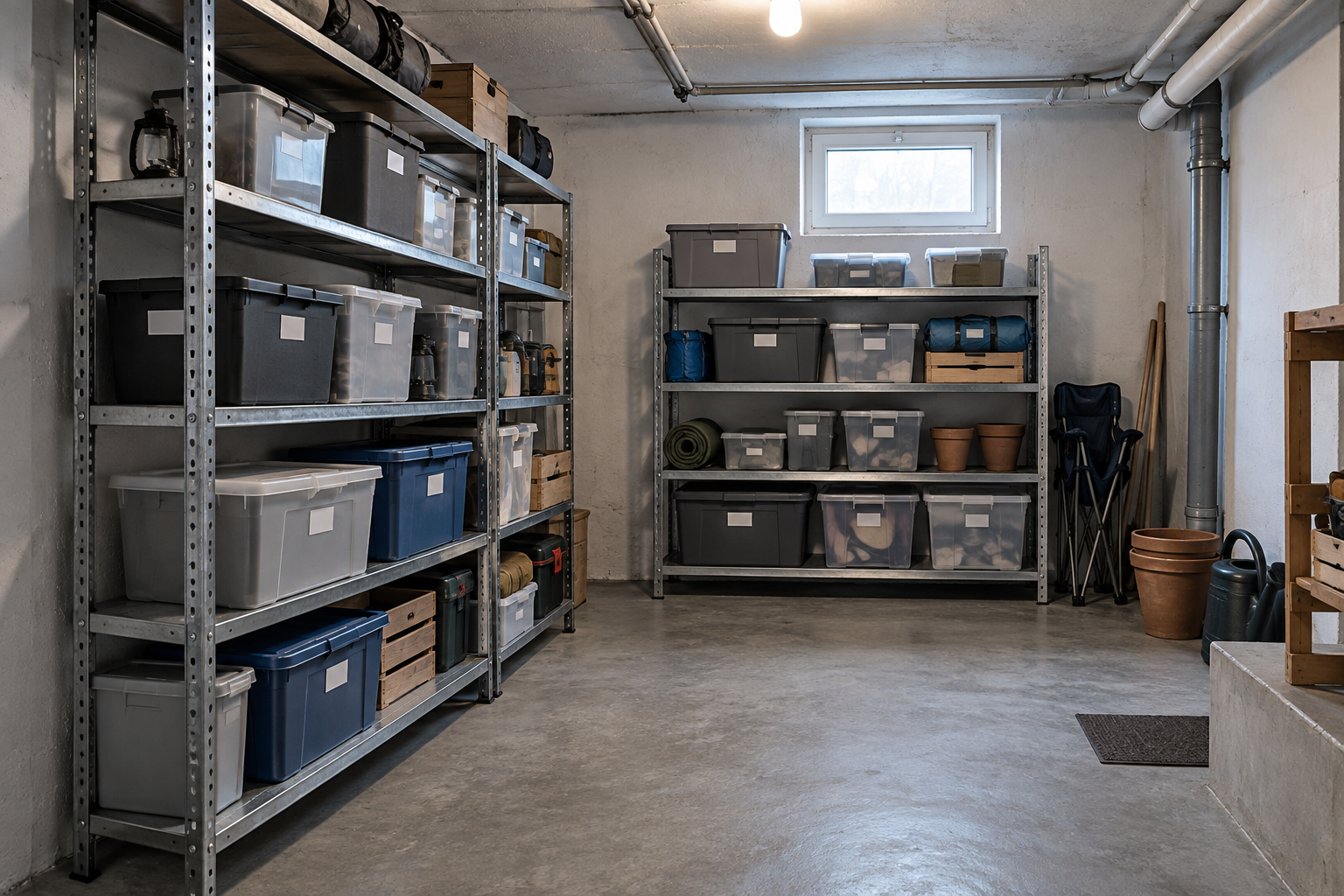
Matching boxes may look tidy, but they are not automatically suitable for every item. Select the size and packaging according to what you intend to store. Pay particular attention to any storage instructions for sensitive materials.
Label containers on the visible side with their contents and, where useful, the date they were packed. A simple numbering system can also help: “Box 04 – Christmas decorations” is easier to identify than several unmarked cardboard boxes.
Photograph the contents of boxes you rarely use before closing them. This saves you from opening each one when looking for something later.
Before moving everything in, draw a simple floor plan. Mark doors, windows, existing pipes and technical equipment. Then position your shelving and leave a sufficiently wide access route.
Meters, shut-off valves and maintenance points should remain accessible. Observe the clearance requirements for any equipment. Windows must also remain usable.
Place frequently needed items where you can reach them without rearranging everything else. When loading shelves, follow the manufacturer’s weight limits and assembly instructions.
An organised basement benefits from an occasional check. For example, use the change between summer and winter equipment as an opportunity to inspect labels, packaging and accessible wall surfaces.
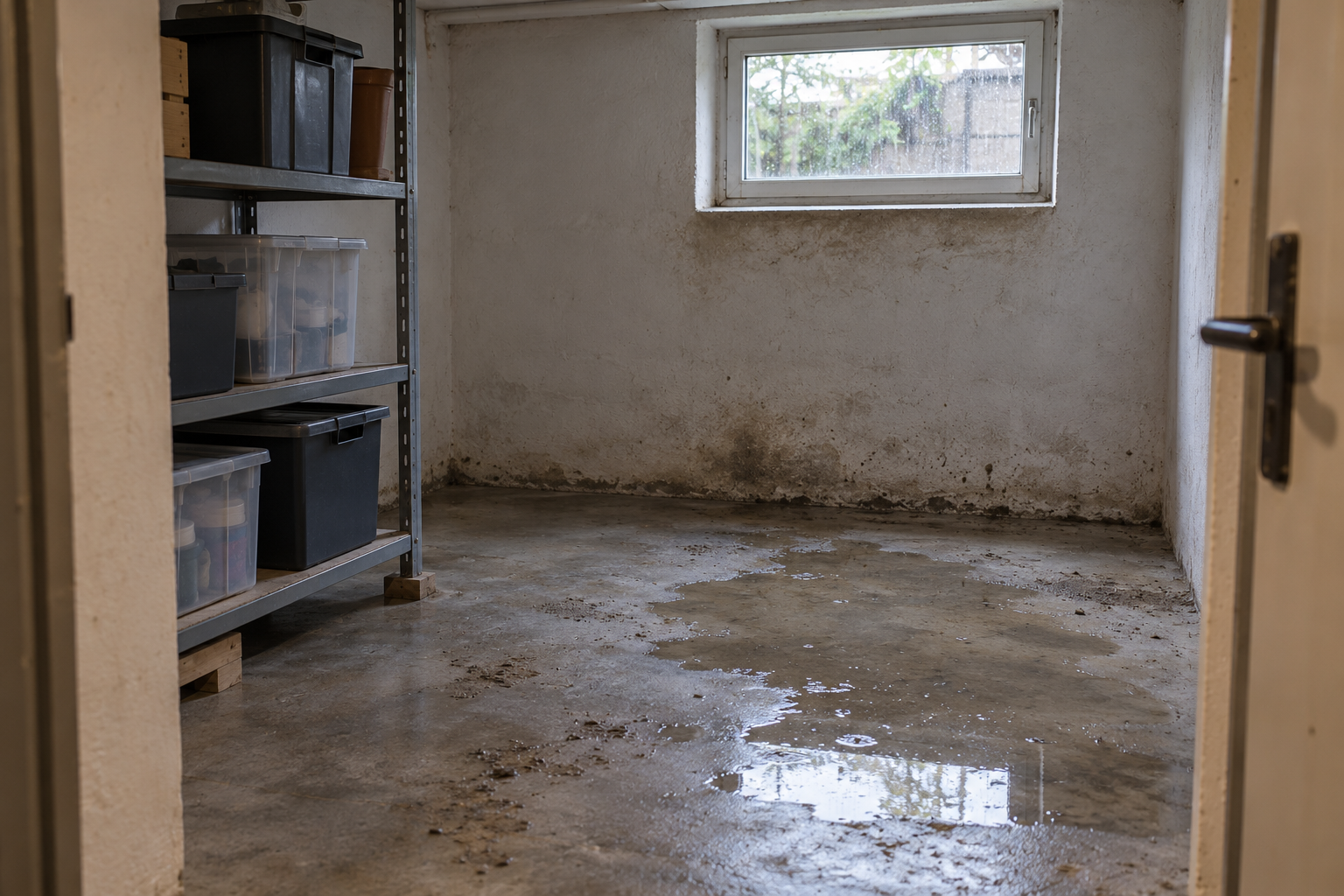
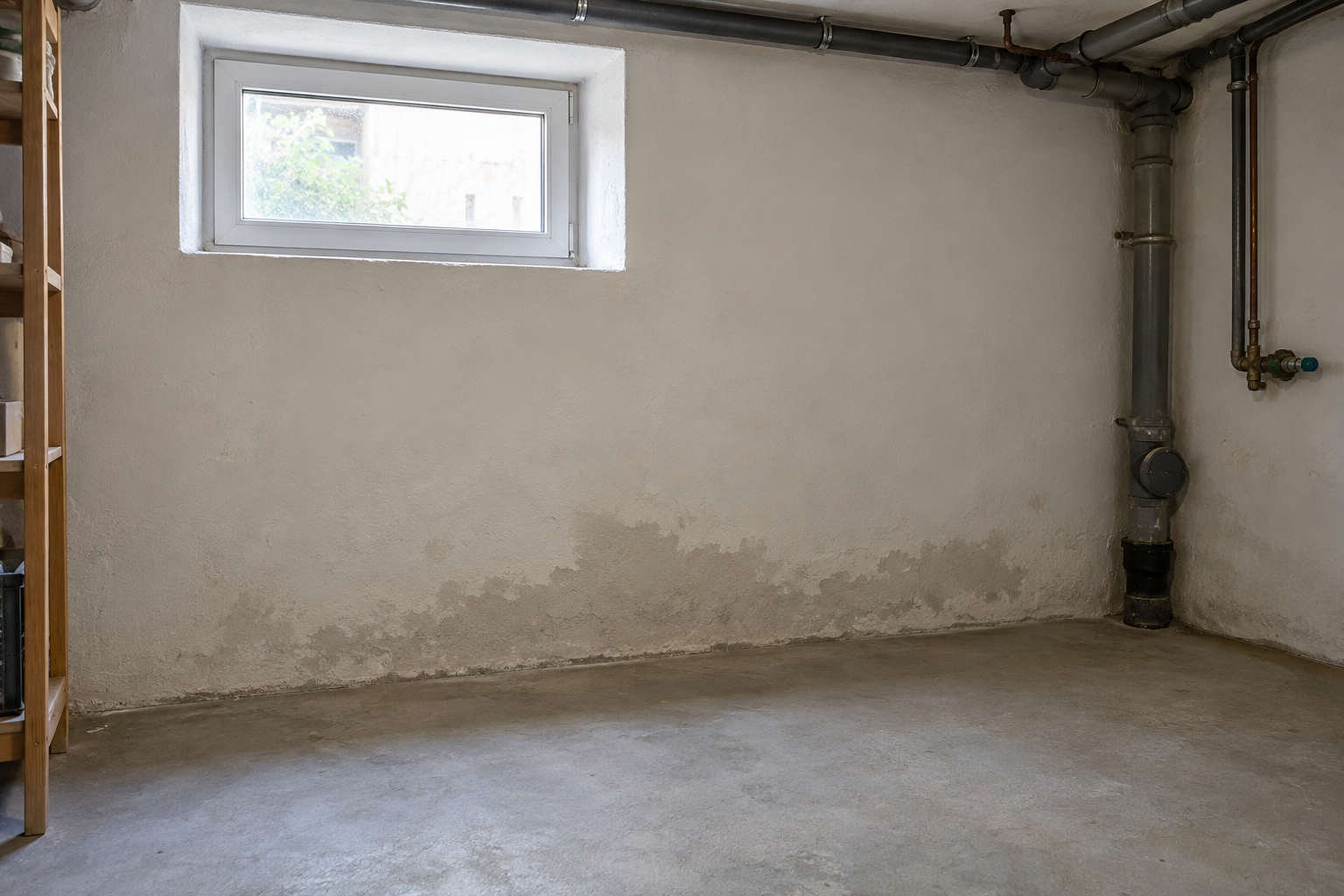
Are any boxes damaged? Have smells or surfaces changed? Are there belongings you have not used for years? Record anything unusual and investigate recurring damp before filling the area with more items.
When you rearrange the room, take a photograph of the new layout. It can help you keep track of your storage and recognise changes later.
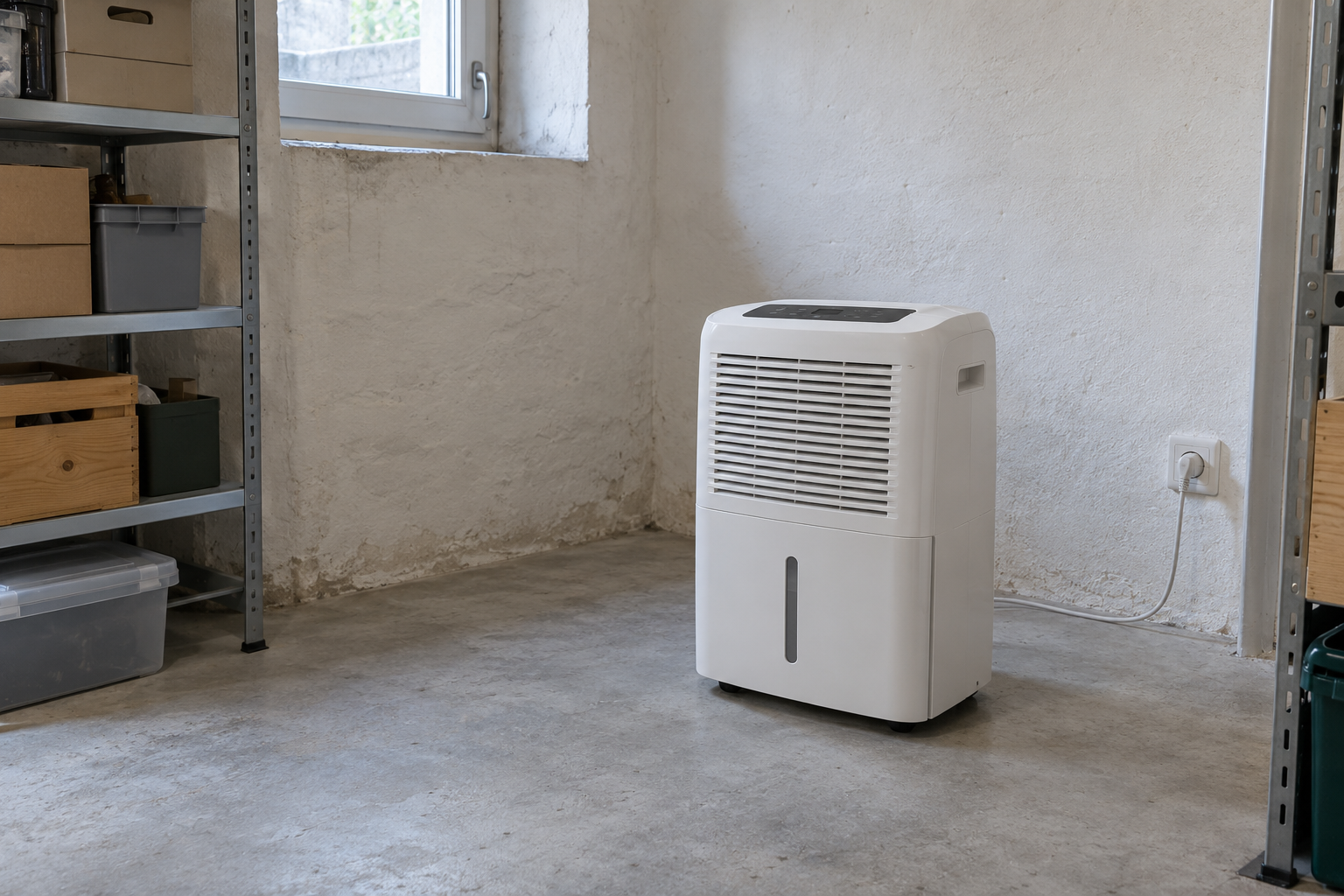
A thoughtful layout improves organisation, but it does not resolve existing moisture problems. You can find further information in our articles “Damp Basement Walls: Understanding the Possible Causes” and “Basement Ventilation: Why an Open Window Does Not Always Help”.
If you would like to find out whether Thor Protect is suitable for your situation, tell us about the condition of your basement and how you plan to use it.




PayPal uses Google reCAPTCHA to help secure the payment process. (More Information)
You are currently viewing a placeholder content from Vimeo. To access the actual content, click the button below. Please note that doing so will share data with third-party providers.
More InformationYou are currently viewing a placeholder content from YouTube. To access the actual content, click the button below. Please note that doing so will share data with third-party providers.
More InformationYou need to load content from reCAPTCHA to submit the form. Please note that doing so will share data with third-party providers.
More Information