- Trusted Shops certified

Small area. Deliberately chosen quantity.
Treating small damp areas – sized for the whole job
A damp patch on the wall should not automatically become a major project. Take a targeted approach to a suitable small job: check the substrate, plan the entire treatment area and only then choose your quantity of material. According to the manufacturer, Thor Protect is also intended for small damp mineral areas. Buying a large kit later is not a requirement.
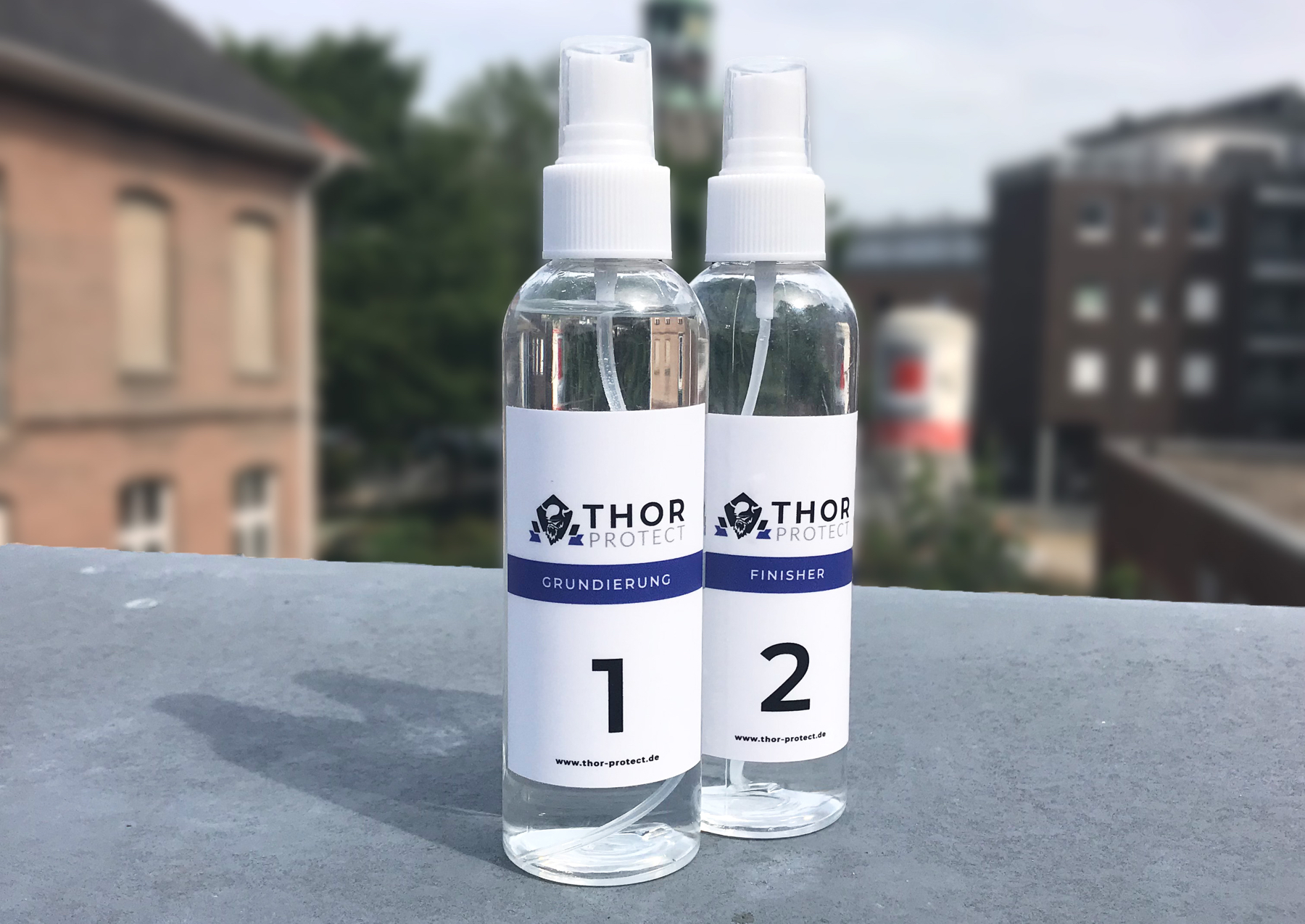
Test or treat a small complete job
I want to carry out a targeted test
Use a limited test area selected according to the instructions. The result applies to this area and is not proof that the entire wall is dry or the cause has been remedied.
I have a small complete job
Plan the entire suitable treatment area, including margins. If the area, substrate and material requirements match, the small purchase may be enough for your job – without planning to buy a large kit later.
Measure more than the visible patch
The visible damp patch is only the starting point. Treatment may include margins that increase material requirements. A 1 m² patch therefore cannot automatically be fully treated with the Test Kit for approximately 1 m².
1. Record the height and width of the visible patch, as well as corners and adjacent areas. 2. Clarify the required margins and suitable substrate. 3. Choose the material for the agreed total area and allow for absorbency.
The existing documentation specifies different margin distances. Therefore, agree on the specific execution before ordering; the diagram is not a spacing specification.
Entire treatment area
Agree on margins in advance
Visible damp patch
Diagram – not to scale, not a spacing specification
A small area does not mean every substrate is suitable
The manufacturer’s documentation provides for the system’s use on suitable mineral surfaces affected by penetrating moisture. This implies neither a solution for every cause of damp nor approval for mould remediation.
Documented mineral substrates
The manufacturer lists stone, concrete, screed, masonry, and lime and cement plaster. The surface must be clean, accessible, absorbent and prepared according to the appropriate instructions.
Clarify in advance rather than simply coat over
No blanket approval for gypsum, plasterboard or existing paint. Remove loose and barrier-forming layers according to the instructions. For condensation, thermal bridges, unknown wall construction or mould, first clarify the appropriate measure.
Choose the quantity for your small job
The square-metre specifications refer to the offered material coverage, not the size of a visible patch. The entire treatment area and actual consumption are the deciding factors.
Test Kit – approximately 1 m²
For a limited test area. As material for a small complete job only after checking suitability, margins and actual requirements. A test does not commit you to buying more.
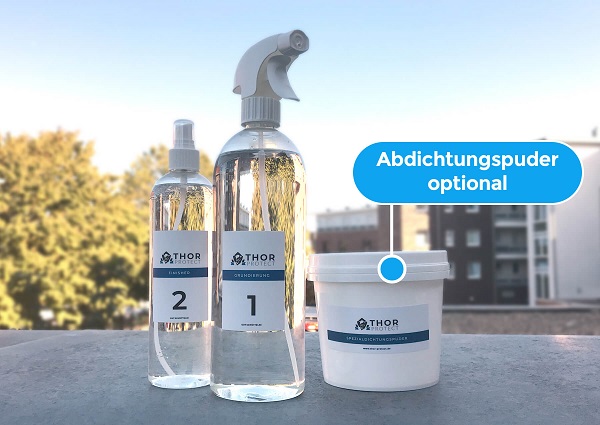
Base Kit – 2.5 m²
For a suitable small total area if the agreed quantity of material is sufficient. Choose the 2.5 m² variant on the product page; buying a large kit is not a requirement.
Base Kit – 5 m²
For a correspondingly sized treatment area, including the agreed margins. The quantity specification is not a guarantee of remediation of a particular damaged or mould-affected area.
Prepare the surface – follow your kit's instructions
Primer and finisher can irritate the skin and eyes. Observe the safety data sheets and the protective measures specified there. A small pack does not automatically make application harmless.
Prepare the surface
Make the suitable mineral surface accessible according to the instructions and protect adjacent sensitive surfaces from splashes.
Apply according to the specific product
Apply primer and finisher according to the instructions supplied with your kit. Do not take the application sequence, saturation or waiting times from another kit.
Check the result and any further requirements
Assess the treated area taking the substrate, moisture condition and instructions into account. Further work and any additional material requirements depend on the actual condition, not on a blanket timetable or plan to buy more.
Questions before buying a small quantity
Is the 1 m² Test Kit enough for a visible patch of 1 m²?
Not automatically. The coverage refers to material for approximately 1 m². Required margins increase the treatment area; the substrate also affects consumption. Clarify the total area before ordering.
Can the Test Kit remain my only purchase?
Yes, buying a large kit later is not a requirement. Whether the Test Kit is sufficient for your entire small job must be checked on the basis of suitability, total area and material requirements. For a test, you initially buy only the test quantity.
When should I choose 2.5 or 5 m²?
Choose a currently offered Base Kit size based on the agreed entire treatment area, including margins, and the expected consumption. The size of the visible patch alone is not enough to make the choice.
How wide does the margin need to be?
The existing manufacturer documentation specifies different distances. We therefore do not give a general figure here. Have the margin required for your substrate and specific situation confirmed in advance.
Does a Test Kit credit also apply to small Base Kits?
A credit is not automatically promised for 2.5 or 5 m² variants. Check the current terms of the specific offer. This selection guide does not promise a voucher or discount.
Can I simply treat plasterboard or a painted wall?
There is no blanket approval for this. Check the wall construction and coating; suitable mineral surfaces must be prepared according to the instructions and be absorbent. The applications listed here do not constitute approval for gypsum and plasterboard.
Is this also the right solution for mould or condensation?
Not automatically. Waterproofing, mould removal and measures against condensation or thermal bridges are different tasks. A kit's material coverage is not approval for DIY remediation from a health or professional perspective.
When can I carry out further work on the treated surface?
That depends on the substrate, moisture condition and appropriate instructions. No fixed drying or completion timeframe is promised here.
The right information for your surface
Application
Read about preparation and the process separately from choosing the quantity.
Your area is in the basement
Use the existing overview for basement suitability and system selection.
Other application areas
Assess the room and substrate; small quantities are a purchasing decision, not a separate type of room.
Relevant information for your project
Plan the whole small job – not the next big purchase
Check the substrate and treatment area, including margins. Then choose the right available offer. Buy more material only if your actual task requires it.
The right quantity rather than more by default
Start with the dimensions and requirements of your surface.