- Trusted Shops certified

Thor Protect application areas
Tackle damp surfaces with a targeted approach – in the basement and beyond
A damp patch does not have to turn into a major renovation project straight away. Check which treatment suits your wall. According to the manufacturer, Thor Protect is intended for prepared mineral surfaces – including small jobs outside the basement. Choose your area and clarify the substrate, cause and quantity of material needed.
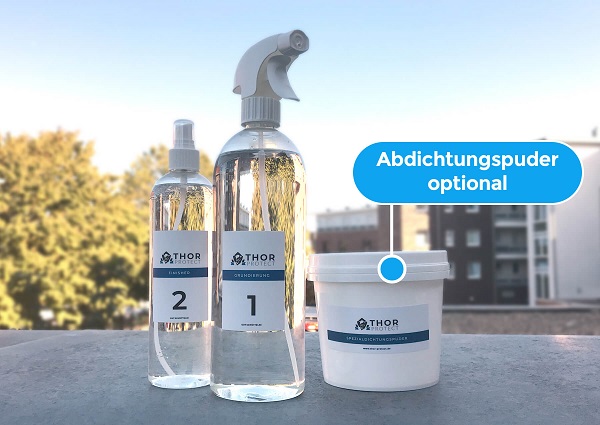
Choose the starting point that suits your situation
Damp walls
Choosing the product is not just about the location: the wall material and cause of the damp determine the approach.
Damp in living spaces
Damp mineral wall surfaces and high humidity are different issues. Assess your situation before treatment.
Treating small areas
Plan a manageable complete job or a targeted test – without automatically buying a large kit.
Mould on the wall
Distinguish between mould removal, the cause of the damp and any subsequent waterproofing.
Waterproofing the basement
Check the system and choice of kits for suitable mineral basement surfaces in our existing basement overview.
Garage & utility rooms
Check damp mineral walls. Roofs, joints and floor coatings for vehicle traffic are not applications that can be inferred from this.
Three factors determine the right treatment
1. Cause of the damp
Distinguish between moisture penetrating from outside, condensation or a thermal bridge. For condensation and thermal bridges, the application of the Thor-Protect base system necessarily differs from its application for moisture or water penetrating from outside. Please find out more in advance.
2. Substrate
The manufacturer’s documentation lists stone, concrete, screed, masonry, and lime and cement plaster. The surface must be appropriately prepared, accessible and absorbent. There is no blanket approval for gypsum, plasterboard or existing coatings.
3. Total area
Plan the treatment area including the required margins. A visible patch is not automatically the area for which you order material.
Damp walls: from the material to the right solution
Take a targeted approach to a suitable mineral wall surface. First check the wall construction and remove barrier-forming or loose layers according to the appropriate instructions. The manufacturer intends the primer and finisher system for penetrating moisture – not as a blanket solution for every cause of damp.
Understand the preparation
Check how to apply the product separately from the question of where it can be used.
Living spaces: treat the wall, without making promises about the indoor climate
The manufacturer also lists living rooms, bedrooms, kitchens and bathrooms as application areas. The suitable mineral surface and the cause of the damp remain the deciding factors. High humidity, cold wall areas or condensation require a separate assessment.
Primer and finisher can irritate the skin and eyes. Observe the product-specific protective measures and keep the products away from children. Listing a room does not constitute approval to apply the products without protection.
A small job, a purchase sized to suit
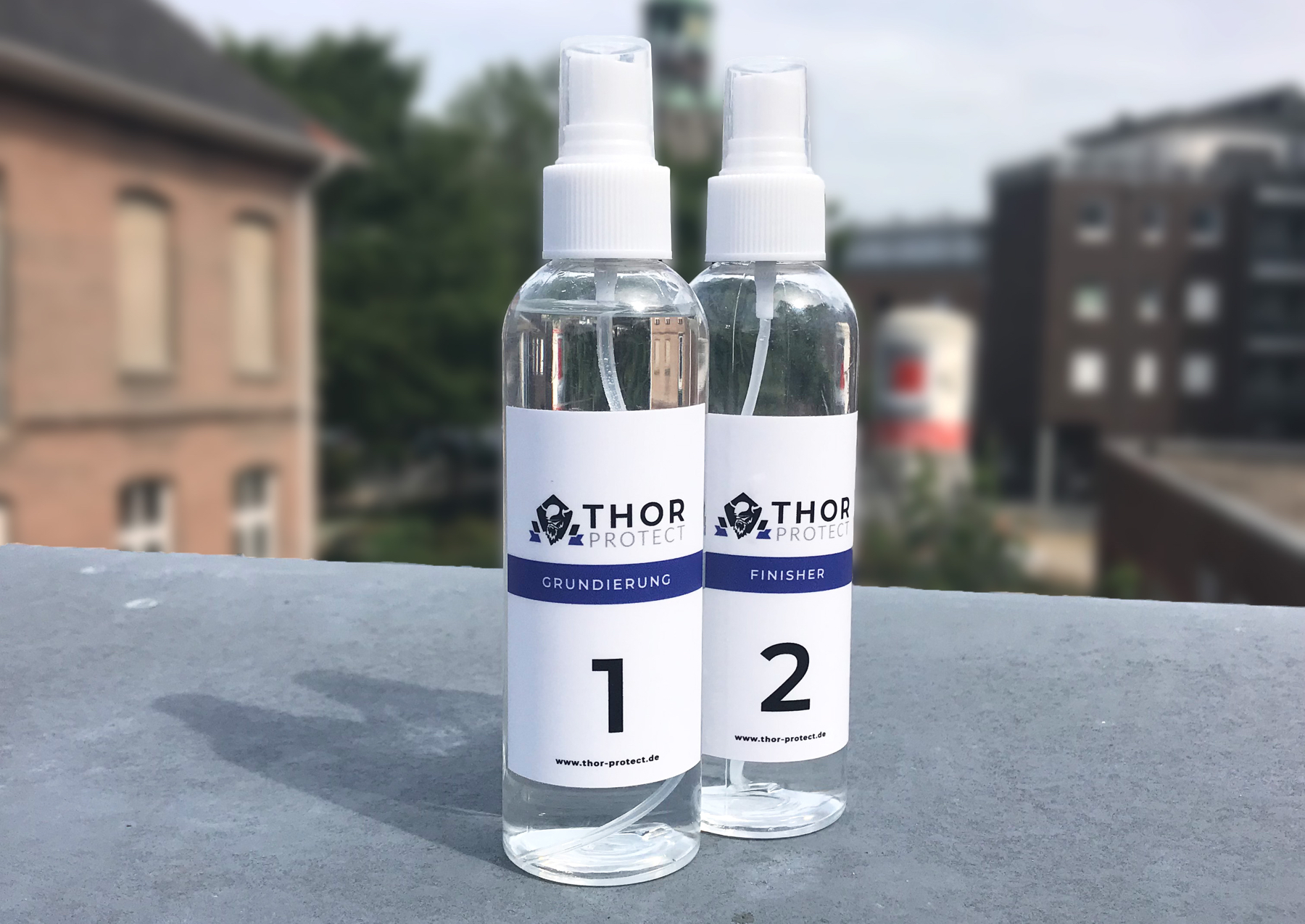
Buy for the entire treatment area. The Test Kit contains enough material for approximately 1 m². Smaller Base Kit variants may also suit a small complete job after checking the quantity and suitability. Buying a large kit later is not a requirement.
Allow for margins and the absorbency of the substrate. Clarify any outstanding measurements before ordering.
A test or a small complete job
The separate selection guide distinguishes between the test area, the visible patch and the entire treatment area.
Mould: decide on removal and waterproofing separately
A waterproofing kit is not a universal mould remover. Clarify the cause, extent of the infestation and suitable approach before choosing products. A pack’s coverage in square metres does not constitute approval to carry out DIY remediation of a mould-affected area of that size.
For a specific mould product, the item, label and safety data sheet must match. The identification of individual kit components still needs to be clarified; we therefore recommend the Thor-Protect “Pilzmörder” here.
If an infestation is unclear or recurring, have its cause and extent assessed by a professional. Do not dry-brush or sweep affected wallpaper or plasterboard. If you have allergies, asthma, respiratory illnesses or a weakened immune system, do not remove mould yourself. Have details of the room, wall material, extent and previous measures ready for a consultation. Photos can support an assessment but do not replace a professional diagnosis.
Garage & utility rooms: focus on the damp wall
Assess a damp mineral garage wall using the same key criteria: cause of the damp, substrate and entire treatment area. Suitable masonry, concrete, and lime or cement plaster may fall within the application area described by the manufacturer. This recommendation is not based on a specific garage case study.
Distinguish the wall-related task from other damage to the building. A leaking roof, open joints, a leaking garage door or condensation in an unheated room are not automatically resolved by this. (Thor-Protect is particularly suitable for heavily used road surfaces and industrial substrates (industrial floors, underground car parks, etc.) that are exposed to high levels of sustained abrasion as well as oil and aggressive chemicals. Exposure to freeze–thaw cycles, high resistance to de-icing salt, strong acids, alkalis, etc. are ideal application areas for Thor-Protect.)
How to proceed: record the wall material and existing coating, clarify the cause of the damp and agree on the required treatment area. Only then choose the right quantity.
Prepare rather than apply a blanket coating
The application instructions explain how to prepare suitable surfaces; they do not replace an inspection of the roof, joints or load-bearing structure.
Choose material to suit your task
Test Kit for approximately 1 m²
For a targeted test; for a small complete job only if suitability, the entire area and material requirements match.
Base Kit by area size
For treating the agreed total area. Choose the right variant in the existing shop rather than ordering more as a matter of course.
Frequently asked questions about application areas
Is Thor Protect only intended for basements?
No. The manufacturer's documentation also lists small areas and applications in living spaces, kitchens and bathrooms. Suitable prepared mineral substrates and an appropriate damp-related task are prerequisites.
Can I treat every wall material with it?
No. The documented substrates include stone, concrete, screed, masonry, and lime and cement plaster. This does not constitute approval for gypsum, plasterboard or arbitrary existing coatings.
Does the Base Kit help with condensation and thermal bridges?
Thor-Protect can also be used for condensation or thermal bridges. However, the application here differs from waterproofing against penetrating water and capillary moisture coming through from outside. Clarify these causes and the appropriate approach separately here. If you suspect condensation or thermal bridges, seek advice from a technician beforehand.
Can I use it to waterproof my garage roof?
You can use Thor-Protect to permanently and effectively waterproof all roofs and façades against water and moisture penetrating from outside. Naturally, this requires a garage roof made of concrete or a similar mineral substrate. Old damaged waterproofing made of bitumen, paints, resins, etc. must of course be completely removed before impregnation with Thor-Protect. The same applies to façades, stables, etc. The garage section covers checking suitable mineral substrates and wall surfaces, not window, garage door or door repairs.
Do I have to buy a large kit after the test?
No. A test or a suitably sized small complete job can be a standalone purchase. Whether more material is needed depends on your actual task.
Start with your surface
Identify your application area and choose the right product only after checking the substrate and quantity.
A tailored choice, not a blanket one
Six starting points lead to the relevant information.